Recurrent Pericarditis
Quick Facts
- Recurrent pericarditis means pericarditis symptoms return after being symptom-free for at least four weeks.
- When the inflammation returns, it’s called a flare.
- This often happens if the first episode didn’t fully resolve or if there’s an autoinflammatory response.
- Diagnosis involves a medical exam, imaging and lab tests.
What is recurrent pericarditis?
Recurrent pericarditis means pericarditis comes back after at least four weeks without symptoms. This return of inflammation is called a flare.
Pericarditis is inflammation of the pericardium. The pericardium is a thin, two-layer sac that surrounds the heart. It helps hold the heart in place and protects it. A small amount of fluid between the layers helps reduce friction as the heart beats.
When the pericardium becomes swollen and irritated, it can cause chest pain and sometimes lead to fluid buildup around the heart. This can be uncomfortable. Many cases are mild and can get better without treatment.
About 15% to 30% of people treated for acute pericarditis may develop recurrent pericarditis if they are not treated with the medication colchicine. Acute pericarditis accounts for about 5% of emergency room visits for chest pain.
Other types of pericarditis include:
- Acute pericarditis: Lasts less than four to six weeks
- Incessant pericarditis: Symptoms last more than four to six weeks but less than three months with therapy
- Chronic pericarditis: Lasts more than three months
View the Recurrent Pericarditis Fact Sheet (PDF)
What are the symptoms of recurrent pericarditis?
Pericarditis symptoms are usually the same each time it happens. Most people have a mix of these symptoms:
- Chest pain is almost always present. It may feel sharp or stabbing and can spread to the arm, neck, shoulder, back or stomach. Some people mistake the pain for a heart attack. The pain often gets worse with coughing, deep breaths or lying down. It may feel better when sitting up and leaning forward.
- Shortness of breath or difficulty breathing
- Heart palpitations or a fast heartbeat
- Low-grade fever, chills or sweating
- Dry cough
- Swollen stomach, legs or feet
- Low blood pressure symptoms, such as lightheadedness, dizziness or fainting
- Weakness or fatigue
Tell your healthcare professional if you’ve had any of these symptoms. Many people with pericarditis are first misdiagnosed with acid reflux or heartburn. Women are more often told their symptoms are from panic attacks, stress or anxiety.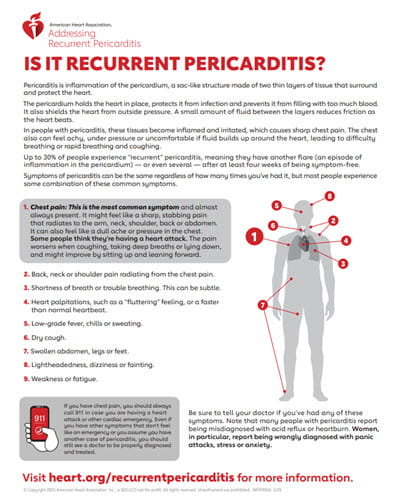
View the Recurrent Pericarditis Symptoms Sheet (PDF)
What causes recurrent pericarditis?
The cause of pericarditis is often unknown. Possible causes of the first case of pericarditis include:
- Viruses, such as herpes, influenza, adenovirus, enterovirus or Epstein-Barr
- Autoimmune conditions, such as lupus, scleroderma and rheumatoid arthritis
- Complications from a heart attack or heart surgery
- Health problems, such as kidney failure or cancer
- Bacterial, fungal and parasitic infections (most common in people with compromised immune systems)
- Radiation to the chest
- Chest trauma
- Certain medications, such as some anti-seizure medications, anticoagulants, antiarrhythmics and newer cancer therapies
If a pericarditis flare happens again, it’s often because the first flare wasn’t fully resolved or because the body has had an autoinflammatory response.
View the Causes of Recurrent Pericarditis Sheet (PDF)
How is recurrent pericarditis diagnosed?
Depending on your age and medical conditions, a primary care doctor, cardiologist, rheumatologist or infectious disease specialist may treat you.
A healthcare professional will listen to your heart for possible rubbing sounds. One or more of the following tests may be used to confirm the diagnosis:
- Blood test: Checks for signs of inflammation (such as C-reactive protein) and helps rule out other problems, such as heart attack.
- EKG (electrocardiogram): Measures your heart’s electrical activity. Certain results may point to pericarditis.
- Chest X-ray: Shows pictures of your heart, lungs and blood vessels. It can show extra fluid around your heart. It may also show signs of infection, sarcoidosis or malignancies that may cause pericarditis.
- Echocardiogram: Uses sound waves to create pictures of your heart and show how well it’s working. It can show fluid buildup around the heart.
- Cardiac CT (computed tomography): Uses X-rays to create clear, detailed pictures of your heart and pericardium. It can help identify inflammation, thickening or calcification of the pericardium, as well as fluid buildup.
- Cardiac MRI (magnetic resonance imaging): Also called CMR, this test uses magnets and radio waves to create detailed pictures. It can show changes in the pericardium.
Let your healthcare professional know if you:
- Have been diagnosed with pericarditis before
- Have had similar symptoms before
- Were recently sick with a viral illness, such as the flu, herpes or a stomach virus
- Have an autoimmune condition, such as lupus, scleroderma or rheumatoid arthritis
Recurrent pericarditis can be hard to diagnose. It is uncommon, and symptoms can come and go, sometimes with long breaks between flares. If you’re taking NSAIDs for a past episode of pericarditis or for another condition, those medications may reduce symptoms and make a flare harder to notice.
Even if you were diagnosed in a hospital emergency room or urgent care center, be sure to tell your primary care doctor or healthcare professional about every episode. This helps make sure you get the right care for possible recurrent pericarditis.
View the Recurrent Pericarditis Diagnosis Sheet (PDF)
How is recurrent pericarditis treated?
Treatment focuses on reducing inflammation, helping prevent future flares and reducing complications. Care is personalized and often includes medications and some lifestyle changes. Recurrent pericarditis is usually treated with colchicine and NSAIDS (anti-inflammatory medications). You may also be advised to limit or restrict physical activity so your body can heal and respond better to treatment.
If NSAIDs and colchicine don’t fully control symptoms, you may be prescribed low to moderate doses of corticosteroids, such as prednisone. Because steroids can increase the risk of another flare, they’re usually used only if someone:
- Can’t take NSAIDs or colchicine
- Is pregnant
- Has an autoimmune condition
For people who don’t respond to standard treatment, interleukin-1 blockers may help reduce inflammation and control symptoms.
In some cases, pericardiocentesis may be needed to drain extra fluid from around the heart. Rarely, a surgery to remove all or part of the pericardium may be needed. This is called a pericardiectomy.
Ask your healthcare professional how long you may need medication and about possible side effects. If cost is a concern, your pharmacist can help you find coupons or prescription assistance programs.
View the Recurrent Pericarditis Treatment Sheet (PDF)
Outlook for recurrent pericarditis
For most people, recurrent pericarditis can be safely managed at home and rarely leads to death. However, it can sometimes cause life-threatening complications, including:
- Stiffening of the pericardium (constrictive pericarditis)
- Too much fluid around the heart (cardiac tamponade)
Some people may also have thickening of the pericardium.
Talk to your healthcare professional if your symptoms continue or come back.
If you feel chest pain of any type, call 911 right away because it may be a sign of a heart attack. If you have recurrent pericarditis, be sure to talk to your healthcare professional about your symptoms and treatment options.
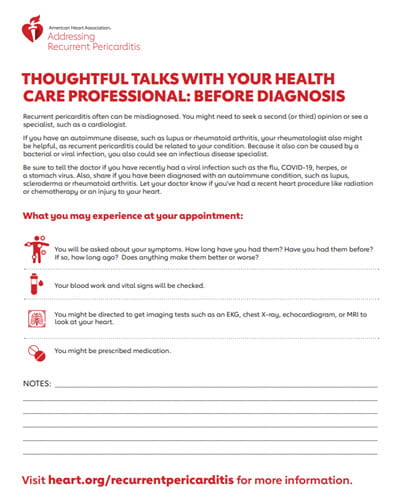
View the Discussion Guide: Before and After Diagnosis (PDF)
Speak up for yourself. Because pericarditis is uncommon, your healthcare professional might not be familiar with the symptoms or treatment options. Don’t hesitate to get a second opinion or to check with a specialist. Getting a second or even third opinion can help ensure the best care.
Support for recurrent pericarditis
It’s normal to feel scared, overwhelmed or confused after being diagnosed with recurrent pericarditis. Getting support from people experiencing the same journey can help you cope. Our online community of patients, survivors and caregivers is here so you and your loved ones can share your experiences, get support from others and ask questions. Find encouragement and join our Support Network.
Recurrent Pericarditis Resources

My Pericarditis Story

My Journey with Recurrent Pericarditis: A Diagnostic Odyssey