Understanding Obstructive Sleep Apnea
Quick Facts
- Obstructive sleep apnea (OSA) can cause breathing to stop and start many times during sleep.
- Family members or sleep partners are often the first to notice signs of OSA.
Noticing symptoms and getting tested early may help improve sleep and overall health.
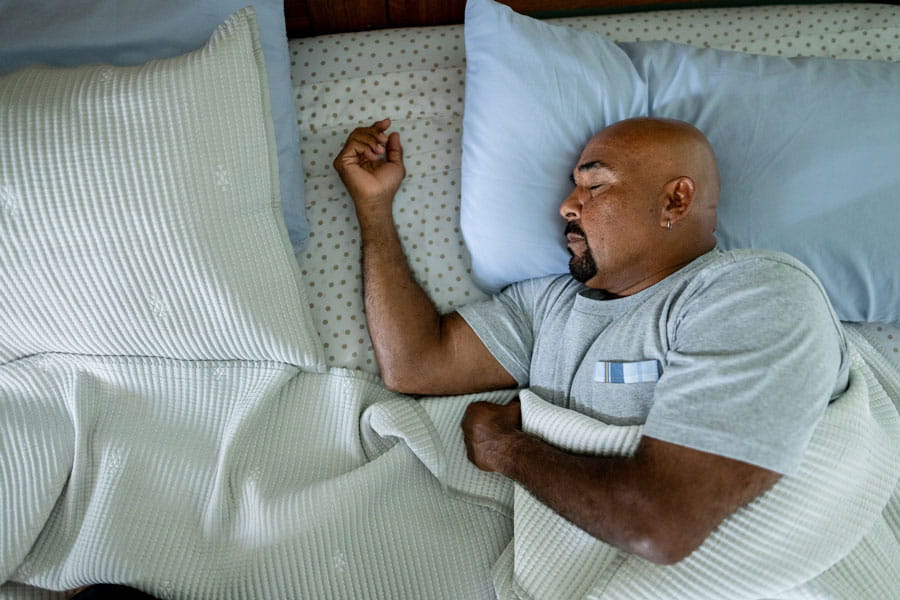
What is obstructive sleep apnea?
Obstructive sleep apnea (OSA) happens when the airway becomes partly or fully blocked during sleep. These blockages can reduce airflow or cause breathing to stop and start many times during the night.
Many people living with OSA do not know these breathing pauses are happening. Because symptoms happen during sleep, family members or sleep partners are often the first to notice them.
How does OSA affect sleep?
Healthy sleep depends on steady breathing and enough oxygen.
When breathing repeatedly stops and starts:
- Sleep may be disrupted
- Oxygen levels may change
- Deep, restful sleep may be reduced
- Daily activities may become harder
What are risk factors for obstructive sleep apnea?
Some factors may increase the risk of developing OSA.
These include:
- Excess weight
- Older age
- Male sex
- Family history of sleep apnea
- High blood pressure
- Type 2 diabetes
- Smoking
- Certain airway features
- Chronic nasal congestion
Why awareness matters
Recognizing OSA early and getting tested may help improve sleep quality, daily activities and overall health.
Common OSA signs and symptoms
OSA symptoms often develop slowly and may go unnoticed for years.
Common signs and symptoms include:
- Loud or frequent snoring
- Pauses in breathing during sleep
- Gasping or choking during sleep
- Restless sleep
- Morning headaches
- Waking up with a dry mouth
- Feeling very sleepy during the day
- Trouble concentrating
- Memory problems
- Irritability or mood changes
Why symptoms are often missed
Because OSA happens during sleep, people may blame symptoms on stress, aging, work schedules or other health conditions.
Knowing the signs may help people seek diagnosis and treatment sooner.
Women and men may present with different symptoms.
When to talk with a healthcare professional
Talk with a healthcare professional if you have symptoms of OSA or concerns about your sleep.


