Lipoprotein(a)
Quick Facts
- Lipoprotein(a), or Lp(a), is a cholesterol carrying lipoprotein in your blood. Your level is mostly inherited.
- A high Lp(a) level (125 nmol/L or higher) can increase your risk for a heart attack or stroke.
- About 1 in 5 people worldwide have high Lp(a). Because it usually doesn’t cause symptoms, your level could be high without you noticing.
- A simple blood test ordered by your healthcare professional is the only way to know your Lp(a) level.
Why an Lp(a) Test Matters for Your Heart Health
High Lp(a) can increase your risk of heart disease and stroke, but it usually does not cause symptoms. The American Heart Association recommends every adult get an Lp(a) test at least once in their lifetime.

¡Nuevo recurso! La lipoproteína (a) y la salud cardíaca de la mujer
Las enfermedades cardíacas y el ataque o derrame cerebral pueden afectar a mujeres de cualquier edad y a lo largo de diferentes etapas de la vida, incluyendo el embarazo y la menopausia. Un nivel alto de Lp(a) puede aumentar tu riesgo.Guía: ¿Qué es la estenosis aórtica?
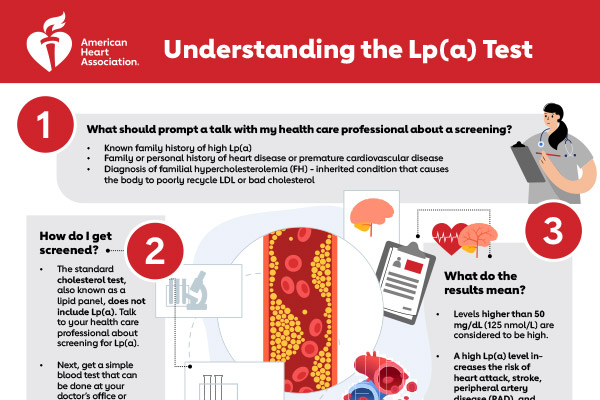
Understanding the Lp(a) Test
Video: ¿Qué es la estenosis aórtica?
Cascade Screening

Lp(a) Myths Vs. Facts

Understanding Your Diagnosis

Games
Fact Check
Match the Statement
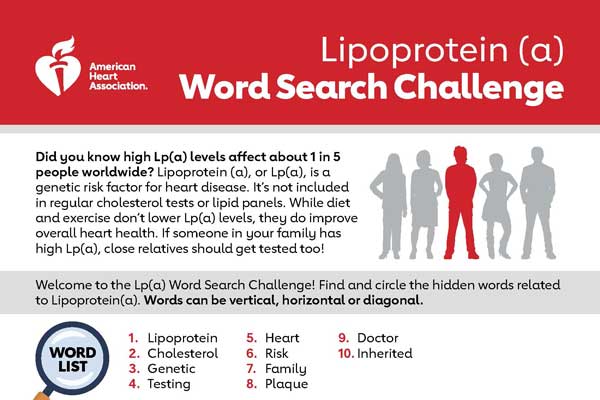
Word Search Challenge
Your Lp(a) Questions, Answered
Lipoprotein(a), or Lp(a), is a cholesterol-carrying lipoprotein in your blood. Your level is mostly inherited, and when it is high, it can increase your risk of heart disease and stroke. About 1 in 5 people have high Lp(a), and many have no symptoms.
An Lp(a) level of 125 nmol/L (50 mg/dL) or higher is considered high and may increase your risk of heart disease and stroke. At 250 nmol/L (100 mg/dL) or higher, your risk may be about twice as high. Your individual risk depends on many factors, not only Lp(a).
Your healthcare professional can explain what your level means for you and help you plan next steps.
A standard lipid panel, also called a cholesterol test, does not include Lp(a). Ask your health care professional to order a separate Lp(a) blood test. Current guidelines recommend that every adult be tested at least once in their lifetime. Testing may be especially important if you have:
- Family or personal history of premature heart disease (under 55 for men and under 65 for women)
- Known family history of high Lp(a)
- Diagnosis of familial hypercholesterolemia (FH), an inherited condition in which people may be born with very high LDL levels
- Lp(a) levels are often higher in people of African descent or South Asian populations.
- Lp(a) levels may increase during pregnancy and menopause.
- Kidney, liver, or thyroid disease may also raise Lp(a) levels.
If your Lp(a) level is high, your close family members should consider getting tested too. This includes your parents, brothers, sisters, and children. Because Lp(a) runs in families, testing can help them learn if their level is high.
Although lifestyle changes don’t lower Lp(a) levels, you can lower your overall risk of heart disease and stroke by:
- Managing other risk factors such as cholesterol, blood pressure and diabetes
- Eating a heart-healthy diet
- Getting regular physical activity
- Maintaining a healthy weight
- Avoiding tobacco products
- Getting 7-9 hours of restful sleep each day
How does Lp(a) impact my health?
Patient Stories

Read Nefertari's storySCAD and the Sticky Little Monster That May Be the Culprit
In my case, a rush of blood tore an artery apart, creating a crushing heart attack while I was pregnant. That baby is 17 now. We made it.

Read Veronica's storyMy Lp(a) Story
I now know that Lipoprotein (a) is a silent risk health factor and that I need to be proactive.

Read Ceirra's storyThe 10th Anniversary Of My Triple Diagnosis
'You just had a heart attack' were not the words I expected to hear as a 14-year-old girl when I woke from my hospital bed.