Posparto

El embarazo genera un estrés adicional en el cuerpo. Incluso aunque no tuvieras problemas cardíacos antes del embarazo, la tensión extra puede aumentar el riesgo de enfermedades cardíacas y ataque o derrame cerebral.
Los problemas relacionados con el corazón pueden ocurrir días, semanas o incluso meses después del parto. Por eso es importante reducir el riesgo antes, durante y después del embarazo.
Habla con tu equipo médico sobre tu riesgo, haz preguntas y conoce las señales y los síntomas de los problemas cardíacos posparto.
Qué factores aumentan el riesgo
Tener ciertos factores de riesgo antes o durante el embarazo puede aumentar las probabilidades de sufrir enfermedades cardíacas o derrame cerebral durante el embarazo y hasta un año después del parto. Los factores y condiciones clave que aumentan el riesgo incluyen:
- Hipertensión
- Preeclampsia
- Diabetes o diabetes gestacional
- Edad (35 años o más en caso del embarazo)
- Masa corporal

El periodo posparto también es un tiempo importante para cuidar de la salud. Muchos problemas cardíacos pueden ocurrir en los días y semanas posteriores al parto, incluso hasta un año después.
Algunos síntomas, como fatiga y dolor leve, son comunes tras el parto. Pero los cambios extraños o repentinos pueden ser señal de ataque o derrame cerebral, problemas cardíacos u otras condiciones peligrosas.
- Haz de tu salud una prioridad. Controla cualquier condición médica, como la hipertensión, y estate atenta a los cambios en tu salud.
- Obtén atención médica ininterrumpida. Dedica tiempo a todas las citas médicas incluso después del embarazo. El cuidado posparto es importante y se recomienda una visita de seguimiento entre 10 y 14 días posteriores al parto para mujeres con hipertensión o enfermedades cardíacas. Puede ser con tu médico primario o cardiólogo. (El Colegio Americano de Obstetras y Ginecólogos sugiere que la atención debería ser sostenida, en lugar de una sola visita).
- Informar a los nuevos profesionales de salud sobre el embarazo. Habla con ellos de cualquier problema relacionado con tu embarazo o parto. Utilizarán este historial médico para ayudar a tratar cualquier problema que pueda surgir.
- Cuida la salud mental. Los cambios que ocurren en el cuerpo tras el embarazo pueden afectar el bienestar mental y social. Busca ayuda urgente si te sientes deprimida o corres el riesgo de hacerte daño a ti o a tu bebé.
- Busca maneras de hacer actividad. Tu equipo de salud te indicará cuándo es seguro hacer ejercicio. La mayoría de las mujeres comienzan caminando, estirándose y haciendo ejercicio ligero. Llevar cuenta del progreso y adaptarse a un cuerpo cambiante es fundamental.
- Duerme bien. Los problemas de sueño son comunes tras el parto y pueden aumentar el riesgo de depresión.
- Come alimentos nutritivos. Si das pecho, tomar las decisiones dietéticas correctas es aún más importante.
- Confía en una red de apoyo. Pide ayuda y reduce tu lista de tareas.
Más información sobre cómo mantenerse sano después del embarazo
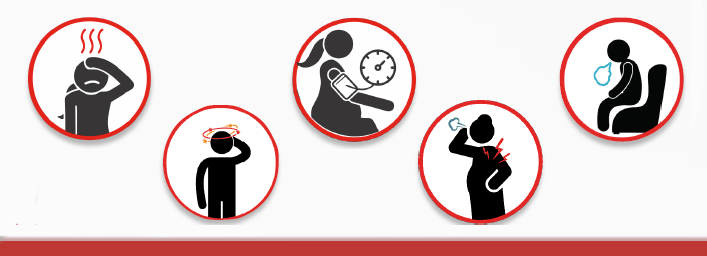
Es importante no descuidar de la salud en los días y semanas posteriores al parto, incluso hasta un año después.
Algunos síntomas, como fatiga y dolor leve, se esperan tras el parto. Pero cambios extraños o repentinos pueden ser señal de ictus, problemas cardíacos u otras condiciones peligrosas. Busca atención médica de inmediato si tienes algún síntoma preocupante durante o después del embarazo, incluyendo: p>
- Dolor de cabeza repentino o intenso
- Desmayo, mareo o debilidad repentina
- Hipertensión
- Dolores en el pecho o corazón acelerado
- Dificultad para respirar en reposo o al recostarse
Habla con tu equipo médico sobre tu riesgo, haz preguntas y conoce las señales y los síntomas de los problemas cardíacos posparto.
Más información: Recordatorios importantes durante el embarazo y el posparto
Si tienes síntomas de una condición cardiovascular tras el embarazo o cualquier otro problema de salud, habla con tu profesional médico de inmediato. Estos son los tres detalles que debes incluir cuando llames o acudas para recibir atención:
-
Por qué llamas: Tus inquietudes
Comunica hace cuánto fue el parto. Explica por qué llamas, incluyendo cualquier síntoma o preocupación.Ejemplo: "Di a luz hace tres semanas y esta mañana empecé a sentir falta de aire, incluso mientras descansaba."
-
Tu historial médico: Cualquier diagnóstico, problema o complicación durante el embarazo o el parto
Si tuviste algún problema de salud antes o durante el embarazo, asegúrate de comunicar esa información. Comunica si has tenido:
- Problemas previos del corazón o presión arterial
- Diagnostico de cualquier afección durante el embarazo
- Antecedentes familiares de enfermedades cardíacas o complicaciones del embarazo
Ejemplo: "Di a luz hace tres semanas y esta mañana empecé a sentir falta de aire, incluso mientras descansaba. Durante el embarazo, estuve hospitalizada a las 36 semanas por preeclampsia y me hicieron una cesárea en la semana 37." - Cómo han cambiado tus síntomas
Dile a tu equipo médico:
- Cuándo empezaron los síntomas
- Cómo te sientes
- Qué cambió, cuánto o con qué frecuencia
- "Qué tan grave" es respecto a tus síntomas nuevos o que empeoran
- (no olvides decir) Estás a menos de un año desde el parto
Proporcionar esta información puede ayudar a tu equipo médico a evaluar la urgencia y los siguientes pasos.
Ejemplo: "Di a luz hace tres semanas y esta mañana empecé a sentir falta de aire, incluso mientras descansaba.
Durante el embarazo, estuve hospitalizada a las 36 semanas por preeclampsia y me hicieron una cesárea en la semana 37.
Incluso solo con levantarme para ir al baño, siento como si hubiera corrido un maratón y no puedo recuperar el aliento durante unos 5 minutos.
Si tienes alguna duda o pregunta adicional, asegúrate de comunicársela a tu equipo de atención.
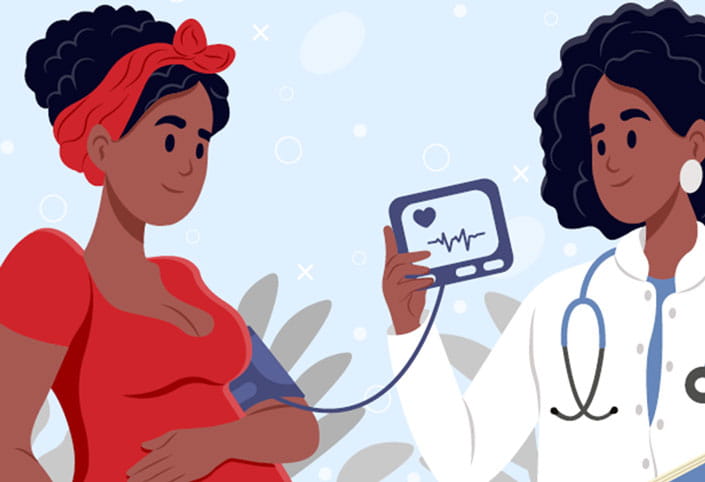
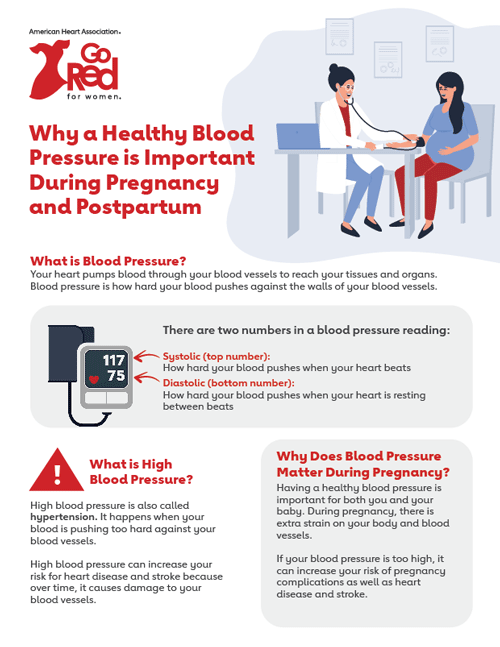
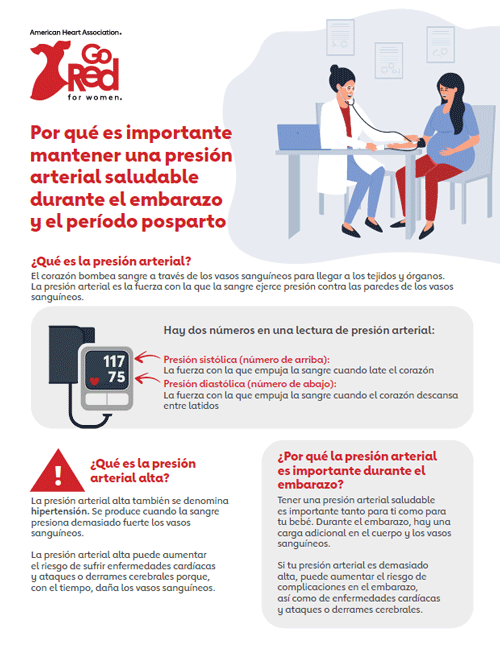
Hipertensión (Hipertensión crónica, hipertensión gestacional) La presión arterial es uno de los factores clave de salud que determinan tu riesgo de enfermedades cardíacas e ataque o derrame cerebral tanto en el embarazo como en el posparto.
Durante el embarazo, los rangos de presión arterial son diferentes. Una presión arterial saludable durante el embarazo es inferior a 140/90 mmHg.
Después del embarazo, tu presión arterial puede cambiar. Pregunta a tu equipo de salud cuál es el nivel saludable y con qué frecuencia debes revisarlo en casa. Si tuviste hipertensión durante el embarazo, programa un chequeo de la presión arterial la primera semana después de volver a casa (dentro de unos 3 a 10 días). Lleva un registro de tus niveles y llévaselo a tu equipo de atención.
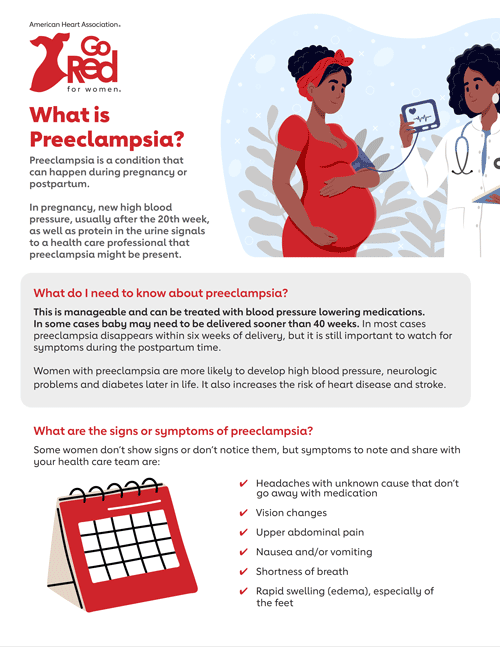
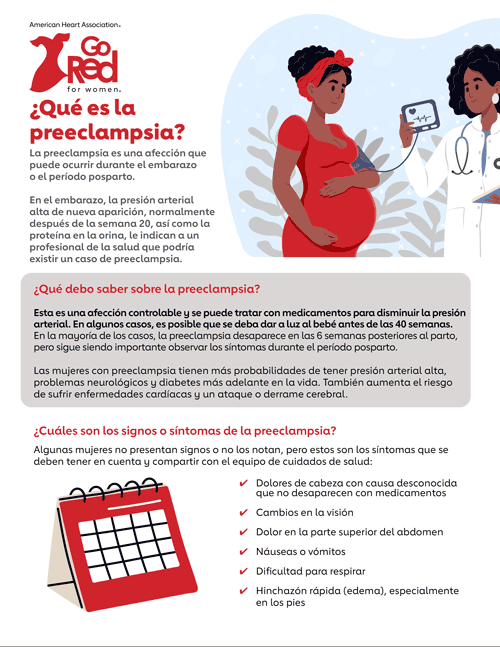
La preeclampsia es una condición que puede ocurrir durante el embarazo o el posparto. Durante el embarazo, una hipertensión nueva, normalmente después de la semana 20, junto a la presencia de proteínas en la orina, indican que podría ser preeclampsia.
Los síntomas pueden incluir:
- Dolores de cabeza con causa desconocida que no desaparecen con medicación
- Cambios en la visión
- Dolor en la parte superior del abdomen
- Náuseas o vómitos
- Dificultad para respirar
- Inflamación rápida (edema), especialmente en los pies
En algunos casos, la preeclampsia puede llegar a ser grave y provocar problemas graves. Los síntomas graves pueden incluir:
- Presión arterial muy alta (160/110 mmHg o más)
- Dolores de cabeza intensos
- Disfunción de los órganos
- Líquido en los pulmones
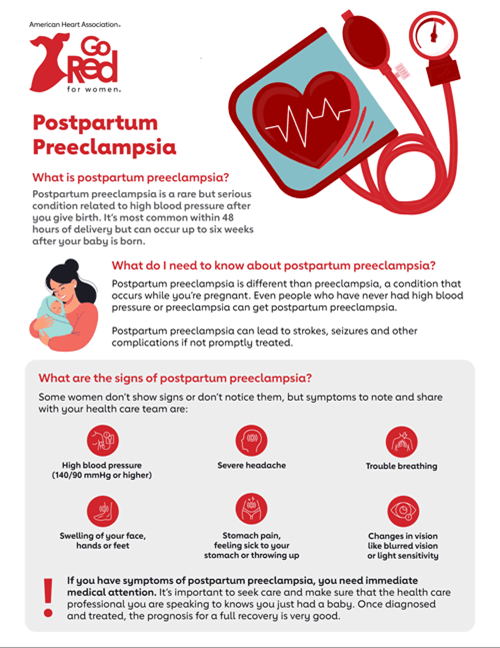
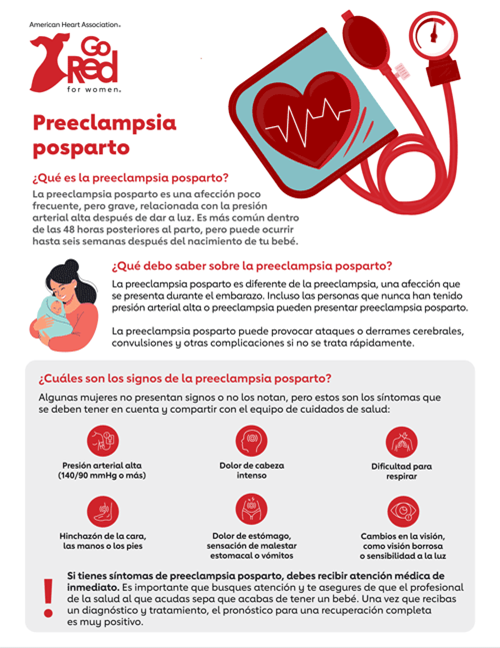
La preeclampsia posparto es una condición poco común pero grave relacionada con la hipertensión después del parto. Es más común dentro de las 48 horas posteriores al parto, pero puede ocurrir hasta seis semanas después del nacimiento del bebé, incluso aunque la presión arterial fuera normal durante el embarazo.
Los síntomas pueden incluir:
- Dolor de cabeza intenso
- Cambios en la visión
- Dificultad para respirar
- Inflamación en la cara o las manos
La eclampsia y el síndrome HELLP
La eclampsia es una complicación grave de la preeclampsia que provoca convulsiones. Tanto la preeclampsia como la eclampsia pueden ocurrir antes, durante o después del parto. El mayor riesgo se produce en la semana posterior al nacimiento.
La eclampsia puede ser peligrosa para la madre y el bebé y debe tratarse de inmediato. No siempre hay señales de aviso ni síntomas, pero la mayoría de las mujeres tienen uno de los siguientes síntomas antes de desarrollar eclampsia:
- Dolores de cabeza severos y persistentes
- Visión borrosa
- Sensibilidad a luces fuertes
- Comportamiento inusual o confusión
El síndrome HELLP es una condición grave. Es una forma grave de preeclampsia y puede ocurrir antes, durante o después del parto.
HELLP, por sus siglas en inglés, significa:
- Hemólisis (la descomposición de los glóbulos rojos, que transportan oxígeno, lo que puede provocar una reducción de oxígeno en el cuerpo)
- Enzimas hepáticas elevadas (una seña de daño hepático)
- Recuento bajo de plaquetas (que puede causar problemas de sangrado)
El síndrome HELLP es poco común, pero si no se trata, puede ser fatal tanto para la madre como para el bebé.
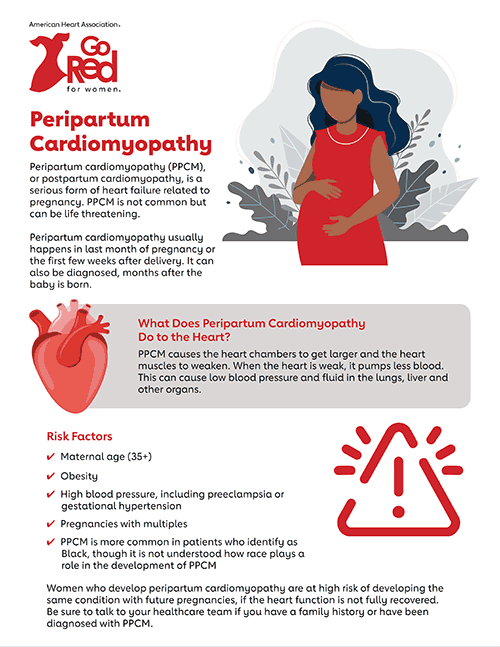
La miocardiopatía periparto (MCPP) es una forma poco común de insuficiencia cardíaca y puede ocurrir en el último mes de embarazo o meses después del parto. Si tienes estos síntomas, busca auxilio médico de inmediato:
- Dificultad para respirar
- Malestar del pecho
- Retención de líquidos
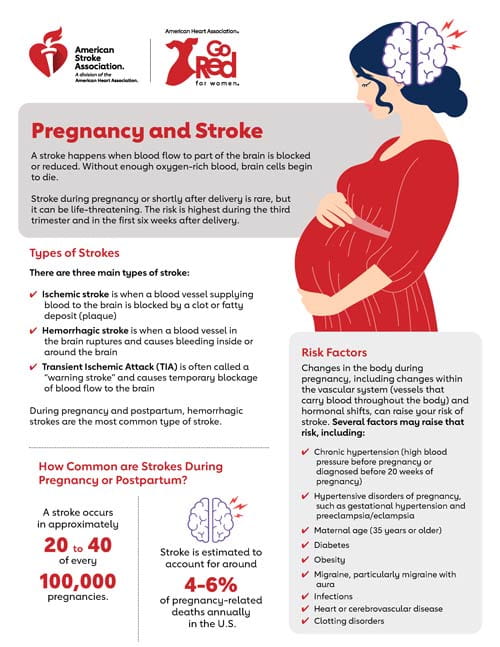
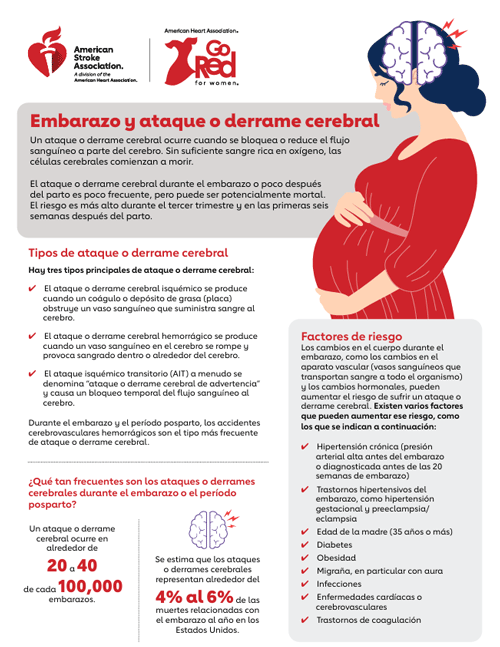
El ataque o derrame cerebral ocurre cuando el flujo sanguíneo a una parte del cerebro se bloquea o se reduce. Sin suficiente sangre rica en oxígeno, las células cerebrales comienzan a morir.
El ataque o derrame cerebral durante el embarazo o poco después del parto es poco común, pero puede ser potencialmente mortal. El riesgo es mayor durante el tercer trimestre y en las primeras seis semanas tras el parto.
Conoce las señales de aviso del ataque o derrame cerebral
El ataque o derrame cerebral es una emergencia. Si estás embarazada o estás en el periodo posparto y sufres un dolor de cabeza intenso, especialmente si ocurre junto a la hipertensión o cualquier señal de derrame, llama al 911 inmediatamente.
Habla con tu equipo de salud
Guía de conversación sobre el historial médico familiar

Lista de verificación para el embarazo

Lista de verificación posparto

Apoyar a las madres: Recursos para defensores y familiares
Ayuda a cuidar a la madre en tu vida mientras ella cuida a su bebé recién nacido. Puedes consultar cómo está, detectar señales y síntomas y animarla a cuidar también de su propia salud. Tu apoyo también puede facilitar la búsqueda de atención en el posparto.
El embarazo y el corazón

Consejos de salud para madres y familias

Historias de sobrevivientes


La iniciativa Advancing Maternal Health (Avanzar en la salud materna) cuenta con el apoyo de Merck for Mothers (Merck para madres), el esfuerzo global de Merck en salud materna para ayudar a crear un mundo en el que ninguna mujer tenga que morir al dar a luz.