Prevention and Treatment of High Cholesterol (Hyperlipidemia)
Know your levels – and what to do about them.
When it comes to cholesterol, it's important to know your levels. Hyperlipidemia means your blood has too many lipids, or fats, such as cholesterol and triglycerides. One type of hyperlipidemia is hypercholesterolemia, which means you have too much non-HDL cholesterol, LDL (bad) cholesterol or both in your blood. This condition increases fatty deposits in arteries and the risk of blockages.
Another way your cholesterol levels can be out of balance is when your HDL (good) cholesterol level is too low. With less HDL to remove cholesterol from your arteries, your risk of plaque and blockages may increase. Atherosclerotic cardiovascular disease, or ASCVD, involves plaque buildup in artery walls which includes conditions such as acute coronary syndrome and peripheral artery disease, and can cause a heart attack, stable or unstable angina, stroke, transient ischemic attack or aortic aneurysm.
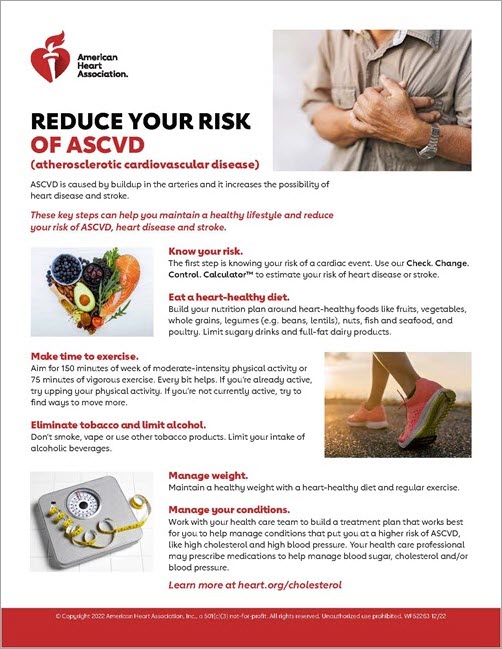
View Reduce Your Risk of ASCVD (PDF) | Spanish (PDF)
People with some health conditions and high cholesterol may be at higher risk for a heart event or stroke. These conditions include type 2 diabetes, cardio-kidney-metabolic syndrome, HIV infection, history of cancer or current cancer diagnosis. Lowering cholesterol can help reduce the risk of a serious heart problem.
Sometimes lifestyle changes alone can’t lower cholesterol enough, and medication may be needed to help reach healthy levels. In addition to adopting healthy lifestyle habits for lowering cholesterol levels, you may be prescribed a cholesterol-lowering medication. If you experience medication side effects, there are other medications available that may be a better fit for you.
Dietary supplements are not recommended for cholesterol management. If you take any supplements, talk with your healthcare team because some may have interactions with prescription medications.
Eating a heart-healthy diet
From a dietary standpoint, the best way to lower your cholesterol is to reduce your intake of saturated fat and trans fat. Focus on foods you enjoy, such as colorful fruits and vegetables, nuts, beans, legumes, whole grains, fiber and lean protein (plants, fish, lean meats). Making healthier recipes doesn’t mean giving up flavor.
Cooking tips for heart health. Start small. You might try swapping one ingredient in a favorite recipe or try one new heart-healthy meal each week. You don’t have to sacrifice flavor to eat well for your health. These simple cooking tips can help you prepare tasty, heart-healthy recipes that could help improve your cholesterol levels by reducing excess saturated fat.
Does the keto diet affect cholesterol levels?
Yes. The keto diet can affect cholesterol levels. Very low carb or keto diets do not typically align with heart healthy eating guidelines because they are often high in saturated fat. Eating more saturated fat may raise LDL cholesterol. These diets can also be hard to follow over time and are not more effective for long term weight loss than less strict eating plans. If you're considering major dietary changes for cholesterol control, talking through options with your healthcare team can help you find safe, effective approaches. Carb or keto diets do not typically align with heart healthy eating guidelines because they are often high in saturated fat. Eating more saturated fat may raise LDL cholesterol. These diets can also be hard to follow over time and are not more effective for long term weight loss than less strict eating plans. If you're considering major dietary changes for cholesterol control, talking through options with your healthcare team can help you find safe, effective approaches.
Getting regular physical activity
How does physical activity help lower cholesterol?
Moving your body helps bring down LDL (bad) cholesterol and raise HDL (good) cholesterol. When you move more, your body becomes better at clearing out extra cholesterol from your blood. This helps keep your arteries clearer and reduces your risk of heart disease and stroke. Find activities you fully enjoy such as walking, dancing, swimming or even gardening.
The most effective exercise for lowering cholesterol is the kind you’ll actually do consistently. Choose what feels doable for you and build from there. About 150 minutes of moderate-intensity activity weekly can make a difference.
Quitting smoking
Smoking and vaping lower your HDL “good” cholesterol. If you smoke and have unhealthy cholesterol, your risk for heart disease is even higher. Smoking also makes other problems, like high blood pressure and diabetes, more dangerous.
Quitting smoking can help lower your triglycerides and raise your HDL. It can also help your arteries work better. If you don’t smoke, try to stay away from secondhand smoke.
Learn more about quitting smoking.
Reaching or maintaining a healthy weight
Maintaining a healthy weight does more than boost your energy or help your clothes fit better. It can also lower your LDL cholesterol and reduce your risk of a heart attack or stroke.
Learn more about losing weight.
Getting 7–9 hours per day of restful sleep
Poor or irregular sleep has been linked with lower HDL and higher LDL and triglycerides. Establishing a consistent sleep routine and creating a relaxing environment can support your body’s ability to regulate cholesterol.
Thoughtful Talks With My Healthcare Professional: My Cholesterol Treatment Plan
Your healthcare professional can help you reach your health goals, including keeping your cholesterol at healthy levels.
Making decisions with your healthcare team is the best way to create a treatment plan you’ll be more likely to stick to. If you don’t understand something, ask for further clarification.
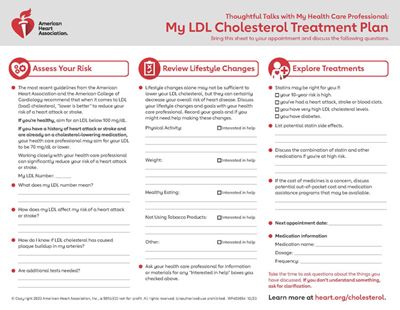
Here’s a helpful checklist (PDF) that you and your healthcare professional can go through to determine your risk and the best treatment options for you.


