Getting Diagnosed: Sleep Studies and Testing
Quick Facts
- A sleep study is one of the most common tools used to diagnose obstructive sleep apnea (OSA).
- Testing may take place at home or in a sleep center, depending on your needs.
- Many treatment options are available to help manage OSA and improve sleep quality.
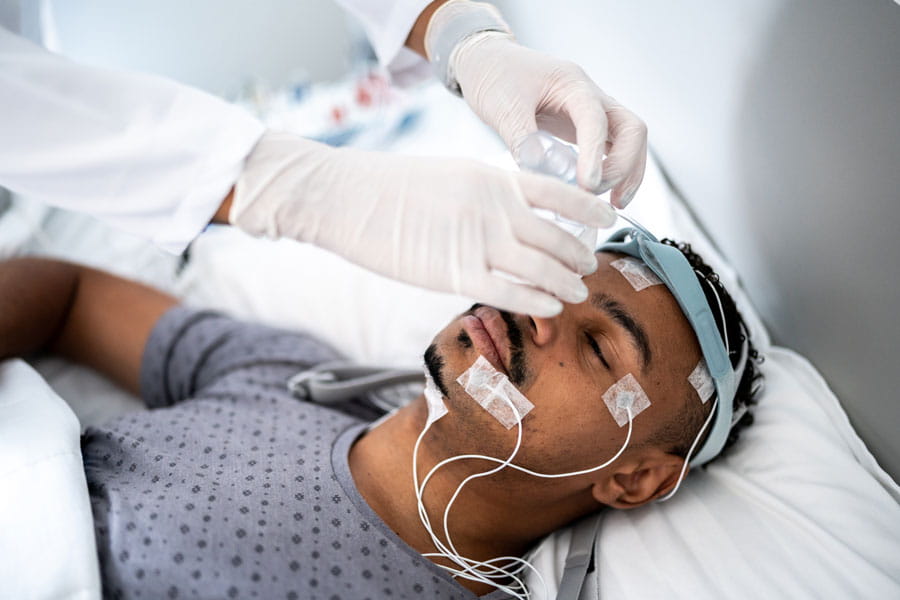
How obstructive sleep apnea is diagnosed
Getting diagnosed usually begins with talking to a healthcare professional about your symptoms, sleep habits and medical history.
Topics may include:
- Snoring
- Being very sleepy during the day
- Morning headaches
- Sleep quality
- Family history
What is a sleep study?
A sleep study measures several aspects of sleep, including:
- Breathing
- Oxygen levels
- Heart rate
- Sleep patterns
Testing may take place at home or in a sleep center, depending on your needs.
Questions to ask your healthcare professional
- Could symptoms be related to OSA?
- Is a sleep study recommended?
- What testing options are available?
- What are the next steps after diagnosis?
What to expect during a sleep study
A sleep study is one of the most common tools used to diagnose OSA.
Knowing what to expect may help you feel more prepared.
Types of sleep studies
Home sleep apnea test
Home testing may measure:
- Breathing patterns
- Oxygen levels
- Heart rate
In-lab sleep studies
A sleep study in a sleep center may monitor:
- Brain activity
- Breathing patterns
- Heart rhythm
- Oxygen levels
- Body movement
Understanding results
A healthcare professional reviews the results to determine whether you have OSA or another sleep disorder.
Obstructive sleep apnea treatment options
Managing OSA often involves a treatment plan based on your needs.
Treatment options depend on your symptoms, health history and individual needs.
Positive airway pressure (PAP) therapy
Common types include:
- Continuous positive airway pressure (CPAP)
- Automatic positive airway pressure (APAP)
- Bilevel positive airway pressure (BiPAP)
These devices help keep the airway open during sleep.
Oral appliance therapy
Custom dental devices may help some people keep the airway open during sleep.
Medications
Some people may be prescribed medications that along with a healthy eating pattern and physical activity can treat OSA.
Lifestyle approaches
Healthy lifestyle changes may include:
- Weight management
- Physical activity
- Quitting smoking
- Improved sleep habits
Surgical treatment
For some people, surgery may be an option to improve airflow during sleep.
Long-term success
Successful treatment often depends on ongoing communication among people with OSA and their caregivers and healthcare team.


