PREVENT Risk™ Assessment
Heart disease doesn't start the day symptoms appear
Heart disease often develops silently over decades. Risk can begin long before a heart attack, stroke ;or diagnosis of heart failure.
That is why understanding your personal cardiovascular risk matters.
What Is PREVENT?
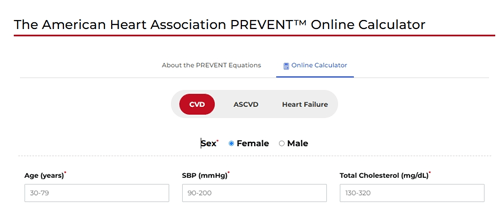
PREVENT (Predicting Risk of Cardiovascular Disease Events) is a sex-specific cardiovascular risk assessment tool that helps healthcare professionals estimate a person's risk for future cardiovascular disease.
Developed by the American Heart Association, it also can support conversations about prevention, lifestyle changes and treatment decisions. PREVENT is designed to help identify risk earlier, creating opportunities to take action before disease develops.
Unlike earlier risk calculators that focused primarily on heart attack and stroke risk, PREVENT estimates risk for:
- Heart attack
- Stroke
- Heart failure
- Overall cardiovascular disease
PREVENT also incorporates factors related to cardiovascular, kidney and metabolic health, providing a broader picture of future cardiovascular risk. The tool can estimate both:
- 10-year cardiovascular risk
- 30-year cardiovascular risk for eligible adults
This longer-term view can be especially helpful for younger women whose short-term risk appears low but whose lifetime risk may already be rising.
Why PREVENT Matters for Women
For many years, cardiovascular risk assessment was largely built around factors that do not always tell the whole story for women. PREVENT uses sex-specific equations and can support more personalized discussions about cardiovascular risk in women.
A female’s heart health can be influenced by unique life experiences, such as:
- Pregnancy and pregnancy complications
- Preeclampsia and gestational hypertension
- Gestational diabetes
- Early or premature menopause
- Polyendocrine metabolic ovarian syndrome, or PMOS (formerly polycystic ovary syndrome, or PCOS)
- Hormonal transitions throughout life
A Different Conversation About Risk
One of the most important benefits of PREVENT is not the number itself. It is the conversation that happens afterward.
A PREVENT score should help you and your doctor discuss:
- Whether your blood pressure, cholesterol, blood sugar or weight deserve closer attention
- How your pregnancy history may affect future heart health
- Whether menopause or reproductive health history may influence your risk
- Whether lifestyle changes could lower your future risk
- If additional testing, monitoring or treatment should be considered
The goal is not to label you as “high risk” or “low risk.” The goal is to better understand your individual health picture and identify opportunities to protect your heart.
Questions Women Should Ask Their Doctor
Am I at risk for cardiovascular disease?
Ask whether a PREVENT assessment is appropriate for you and what your results mean.
What does my long-term risk look like?
Even when short-term risk is low, a 30-year view may provide valuable information, especially for younger women.Does my pregnancy history matter?
Conditions such as preeclampsia, gestational diabetes, preterm birth and hypertension during pregnancy can provide important insight into future heart health.Could menopause affect my cardiovascular risk?
Changes during perimenopause and menopause can influence cholesterol, blood pressure, metabolic health and overall cardiovascular risk.What can I do today to lower my future risk?
Many cardiovascular risk factors can be improved through lifestyle changes, preventive care, and, when appropriate, medications.
Know Your Numbers. Know Your History.
Knowing your cardiovascular risk starts with knowing your health information.
Talk with your doctor about:
- Blood pressure
- Cholesterol
- Blood sugar
- Body weight and waist circumference
- Kidney health
- Smoking or vaping history
- Family history
- Pregnancy history
- Menopause timing and symptoms
Every piece of your health story can help create a clearer picture of your heart health.
PREVENT is a Tool, Not a Diagnosis
PREVENT is designed to support shared medical decision making with your healthcare team, not replace it. Your risk score is one part of a much bigger conversation that includes your medical history, personal preferences, family history, symptoms and goals.
When you understand your risk and feel empowered to discuss it with your doctor, you can take important steps toward protecting your heart health for years to come.
Take the Next Step
PREVENT is a sex-specific cardiovascular risk assessment tool that can help estimate risk for future cardiovascular disease. Ask your doctor whether a PREVENT cardiovascular risk assessment is right for you and how it can help guide decisions about your heart health.