Complete Atrioventricular Canal Defect
Quick Facts
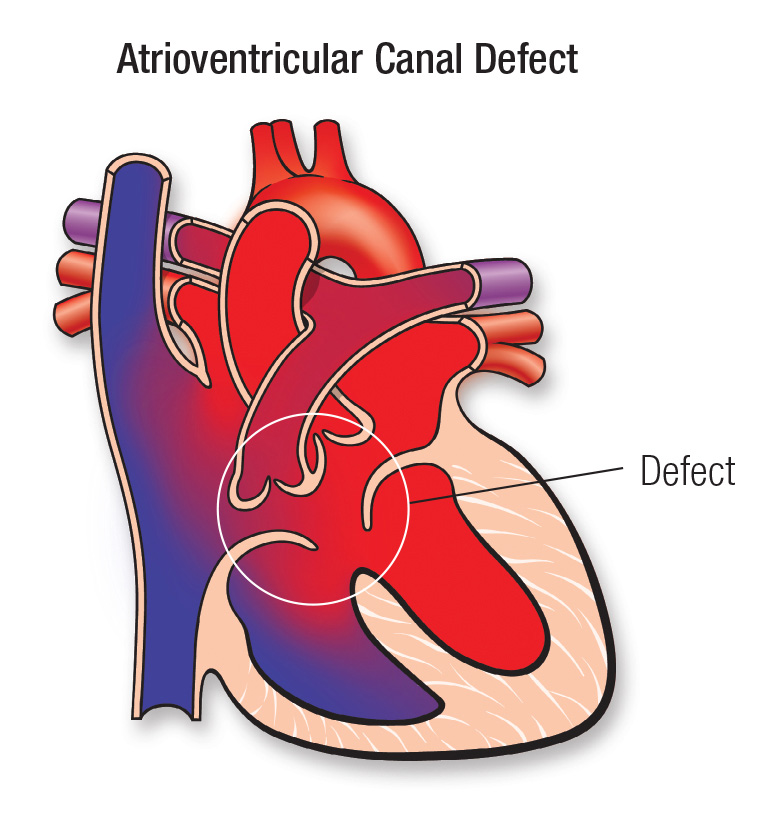
- A heart with a complete atrioventricular canal defect includes a large opening in the center of the heart that involves both the upper and lower chambers.
- This hole affects all four chambers of the heart and the valves.
- A CAVC defect makes it harder for the heart to pump blood in the correct direction.
- Surgery can repair the defect by closing the openings and rebuilding the heart valves.
What is a complete atrioventricular canal defect (CAVC)?
Many terms are used to describe this complex defect. They include:
- Atrioventricular (AV) canal defect
- Complete AV canal defect
- Complete common AV canal defect
- Atrioventricular septal defect
- Endocardial cushion defect
In a heart with a CAVC defect, there is a large opening in the center of the heart that includes defects in both the atrial and ventricular walls. This hole affects all four chambers, which are normally separated. In a healthy heart, oxygen-rich blood from the lungs stays separate from oxygen-poor blood from the body. With a CAVC, these blood flows can mix.
A CAVC defect also affects the heart valves. Normally, the heart has two separate valves, the tricuspid valve and the mitral valve, that control blood flow between the upper and lower chambers. In a CAVC defect, these valves do not form separately. Instead, one large valve forms and crosses the hole in the center of the heart. This can cause blood to leak backward and flow abnormally between chambers, making it harder for the heart to pump blood efficiently.
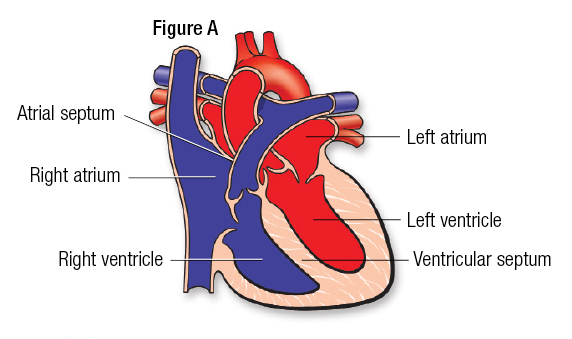
The heart has four chambers. The upper two chambers are the atria, and the lower two are the ventricles (Figure A). The chambers are separated by a wall of tissue called the septum. Blood is pumped through the chambers, aided by four heart valves. The valves open and close to let the blood flow in only one direction.
What causes a CAVC defect?
In most cases, the cause isn’t known. It’s a very common type of heart defect in children with certain chromosome conditions, such as Trisomy 21, also known as Down syndrome. Some children can have other heart defects along with the AV canal defect.
How does a CAVC affect the heart?
In a healthy heart, the left side pumps blood to the body, and the right side pumps blood to the lungs. The two blood flows stay separate.
With a CAVC defect, there are holes in the center of the heart. This can cause blood to leak backward and flow abnormally between the chambers, making it harder for the heart to pump blood efficiently. The extra blood being pumped into the lung arteries makes the heart and lungs work harder than they should. Over time, increased blood flow to the lungs can lead to fluid buildup and damage to the lung blood vessels.
A CAVC defect can also affect the valve in the center of the heart. The valve can leak, causing regurgitation and making the heart work even harder. This may add to the heart failure symptoms.
What are the symptoms of a CAVC defect?
Symptoms of a CAVC defect can vary by age and how severe the defect is. In infants and young children, symptoms may include:
- Breathing faster and harder than normal
- Trouble feeding
- Poor weight gain or slow growth
These symptoms may not appear right away and often develop several weeks after birth.
Because extra blood flows to the lungs, pressure can build up in the lungs’ blood vessels. Over time, this high pressure can damage the blood vessels. This condition is called pulmonary hypertension and can continue into adulthood.
Adults who have not had the defect repaired may develop pulmonary hypertension, which in severe cases can progress to Eisenmenger syndrome. Even in adults without Eisenmenger syndrome, adults with a CAVC defect may have symptoms including:
- Shortness of breath
- Difficulty exercising
- Heart palpitations
During a physical exam, a healthcare professional may hear abnormal heart sounds, called murmurs. This is caused by blood flowing through the holes in the heart and by leakage from the abnormal valve.
How can a CAVC defect be treated?
A complete AV canal can be repaired with surgery. Open-heart surgery is needed to fix the defect. Unlike some other types of septal defects, an AV canal defect can’t close on its own because of its size and involvement of the heart valves. Medications may be used to help manage symptoms and reduce strain on the heart, but they don’t correct the defect or prevent permanent damage to the lung arteries.
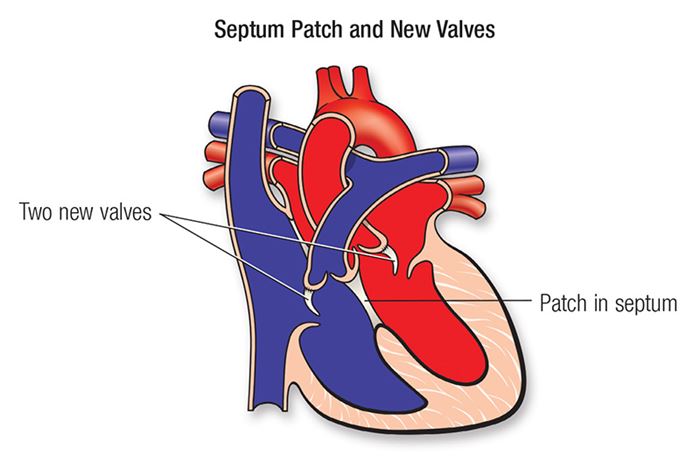
In an infant with severe symptoms or high blood pressure in the lungs, surgery is usually done in infancy. During the operation, the surgeon closes the large hole with one or two patches. Over time, the patch becomes a permanent part of the heart as the heart’s lining grows over it. The surgeon also divides the single valve between the upper and lower chambers to create two separate valves, making them as close to normal as possible.
If an infant is very ill or the defect is too complex to repair right away, a temporary procedure may be needed to relieve symptoms and reduce pressure in the lungs. This procedure, called pulmonary artery banding, narrows the pulmonary artery to limit blood flow to the lungs. When the child is older, open-heart surgery is done to remove the band and fix the AV canal defect.
CAVC defects in children: What families need to know
Which activities can my child do?
If the AV canal defect has been repaired with surgery, your child may not need special limits on physical activity. Many children can take part in normal activities without added risk.
Being physically active is good for heart health. However, some children may need to limit their activity based on their heart condition. Your child’s pediatric cardiologist can help you understand which activities are safe and which limits, if any, are needed.
What will my child need in the future?
After surgery, your child will need regular checkups with a pediatric cardiologist. In some cases, more medical or surgical treatment is needed.
Surgical repair of an AV canal usually helps the blood flow return to normal. However, the repaired heart valve may not work normally. It can sometimes leak or become narrow. Even so, the long-term outlook is good for many children. Most don’t need ongoing medication or additional surgery.
What about preventing endocarditis?
Children with an AV canal defect may be at risk for endocarditis, an infection in the heart, both before and after repair. Talk with your child’s healthcare team about your child’s risk. Ask if antibiotics are needed before certain dental or medical procedures. Good oral care is important for everyone and can help lower the risk of infection.
CAVC defects in adults: What to expect
Some people have partial forms of AV canal defects where the opening between the lower chambers is small or absent. They can present in adulthood with findings similar to those with atrial septal defects. This can be referred to as an “ostium primum” atrial septal defect. Isolated holes between the lower chambers (ventricular septal defects) are a different type of heart defect and are not classified as AV canal defects.
What if an AV canal defect was repaired in childhood?
Surgery to repair an AV canal defect usually helps blood flow return to normal. For many people, the long-term outlook is good, and no ongoing medications or extra surgery is needed.
As the child grows, however, the repair may change over time. In some cases, small leaks can develop in the patch, the repaired valve may leak or the pathway that carries blood to the body may become narrow. These changes can make the heart work harder and may cause symptoms. Regular follow-up care is important.
If the AV canal defect persists, should it be repaired in adulthood?
Deciding whether to repair an AV canal defect in adulthood can be complex. It depends on several factors, including the pressure in the lungs and how well the heart is able to pump blood.
When the pressure isn’t too high and the heart is working well, surgery may be an option. In these cases, repair can improve symptoms and overall heart function.
To help make a decision, doctors usually perform a heart catheterization to measure pressure in the heart and lungs. These defects can’t be repaired using catheterization, however. Surgery is required to fix the defect and valves.
What CAVC defect problems are common in adulthood?
Problems in adults with a repaired AV canal depend on how well the repair is working. Some people may have patch leaks or valve regurgitation. These problems can lead to symptoms of heart failure, including:
- Shortness of breath
- Trouble exercising
- Swelling in the legs
Some adults may also have abnormal heart rhythms. These can cause palpitations, which feel like skipped or fast heartbeats. Fainting is uncommon. In some cases, damage to the heart’s electrical system during surgery means a pacemaker is needed.
Adults with an unrepaired AV canal often have low oxygen levels and may look bluish (see Eisenmenger syndrome). Because of valve leaks on the left side of the heart, they are more likely to develop heart failure than people with Eisenmenger syndrome caused by other heart defects, such as atrial or ventricular septal defects.
Ongoing Care
An adult with a repaired or unrepaired AV canal defect should be examined regularly by a cardiologist with experience in adult congenital heart disease. How often you need care depends on factors including:
- How well the repair is working
- If you have abnormal heart rhythms
- If you have pulmonary hypertension
In general, you should visit the cardiologist at least once a year.
You should also work with a cardiologist who specializes in adult congenital heart disease before having any type of non-heart surgery or invasive procedure, or if you’re thinking about heart surgery.
Medical
Some adults may need heart failure medications, especially if a heart valve is leaking. These medications help the heart pump better or help lower blood pressure. People with pulmonary hypertension may also need medications.
Your cardiologist may monitor your heart with noninvasive tests as needed. These may include electrocardiograms (EKGs), Holter monitors, exercise stress tests and echocardiograms.
If more surgery is considered, a heart catheterization is almost always needed to help guide treatment decisions.
Activity
If the AV canal defect has been repaired with surgery, you may not need special limits on physical activity. However, some people with heart failure and pulmonary hypertension may need to limit certain activities. Your cardiologist can help you understand which activities are safe for you.
Endocarditis prevention
Talk with your healthcare team about your risk for endocarditis, an infection in the heart, before or after surgery. Ask if antibiotics are needed before certain dental or medical procedures. Good oral care is important for everyone and can help lower the risk of infection.
Pregnancy
If you had surgery and do not have significant remaining heart problems, the risk during pregnancy is usually low, but evaluation by a cardiologist is still recommended. If there are ongoing problems, such as a leaking valve or irregular heart rhythms, you may have a higher risk for pregnancy-related complications.
People with heart failure or pulmonary hypertension may face higher risks during pregnancy and need careful evaluation. Women with unrepaired AV canal defects or with leftover heart problems should talk with a cardiologist who specializes in adult congenital heart diseases before deciding to become pregnant.
Some people with repaired AV canal defects who do not have significant problems may not need high-risk obstetrical care. Others, such as those with unrepaired AV canal defects, significant valve leaks or pulmonary hypertension, may need more specialized care during pregnancy.
When is more surgery needed?
How well the repaired heart valves work over time is an important long-term concern. Some people may need another surgery later in life to replace a valve, sometimes with a mechanical valve. In most cases, the valve can’t be repaired again. Other people may need more surgery to fix small leaks that can develop in the patch used to close the heart. Regular follow-up care is important to watch for these issues.


