Tetralogy of Fallot
Quick Facts
- Tetralogy of Fallot is a heart defect with four distinct problems.
- Surgery is needed to repair the heart. Sometimes the surgery is done in stages.
- People who have had tetralogy of Fallot need lifelong care from a cardiologist.
What is tetralogy of Fallot?
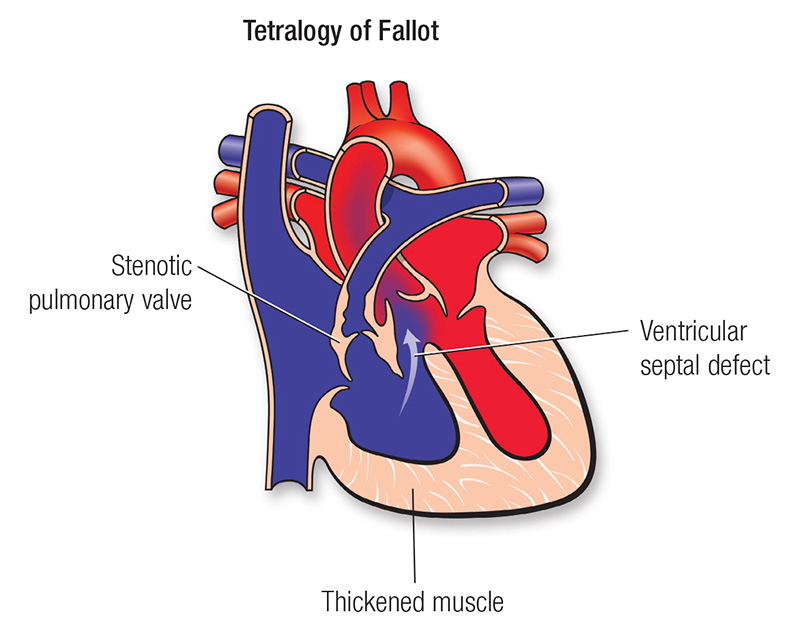
Tetralogy of Fallot is a heart defect present at birth. It includes four different heart defects:
- Ventricular septal defect (VSD): A hole between the lower chambers of the heart
- Pulmonary stenosis: A blockage that limits blood flow from the heart to the lungs
- Overriding aorta: The aorta is positioned above the hole, allowing it to receive blood from both sides of the heart
- Right ventricular hypertrophy: The muscle of the lower right chamber is thicker than normal
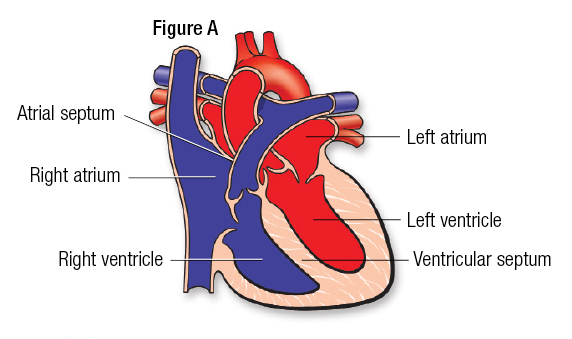
The heart has four chambers. The upper two chambers are the atria, and the lower two are the ventricles (Figure A). The chambers are separated by a wall of tissue called the septum. Blood is pumped through the chambers, aided by four heart valves. The valves open and close to let the blood flow in only one direction.
What causes tetralogy of Fallot?
In most cases, the cause isn’t known.
Tetralogy of Fallot develops during early fetal heart development and can sometimes be associated with genetic conditions, including Down syndrome and DiGeorge syndrome. Some children may also have other heart defects along with it.
How does tetralogy of Fallot affect the heart?
In a healthy heart, the right side pumps blood to the lungs, and the left side pumps blood to the body.
With tetralogy of Fallot, blood doesn’t flow the usual way. Because of the blockage that limits blood flow to the lungs, blood can pass through the hole between the lower chambers of the heart and flow directly into the aorta. As a result, some oxygen-poor blood is sent to the body instead of first traveling to the lungs to pick up oxygen.
This means the body may not get as much oxygen as it needs. Babies and young children may have a bluish color to their skin, lips or nails (called cyanosis). This happens because their blood has less oxygen.
How is tetralogy of Fallot treated?
Tetralogy of Fallot is treated with surgery.
Some babies may need a temporary procedure first if they are very small or have other health problems. A full repair is done later.
In some cases, the first surgery is the full repair.
Temporary Operation
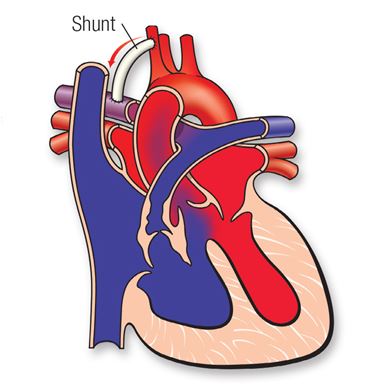
Some babies may need a temporary procedure first to help more blood flow to the lungs.
In this procedure, doctors place a shunt (a small tube) between an artery that carries blood to the body and the pulmonary artery, which carries blood to the lungs. This helps blood reach the lungs. It is not open-heart surgery and does not fix the problem inside the heart. The shunt is removed later during the full repair.
In some cases, a stent (a small mesh metal tube) may be be placed in the ductus arteriosus or another blood vessel to improve blood flow to the lungs.
Complete Repair
A full repair is usually done early in life. During this surgery, the surgeon:
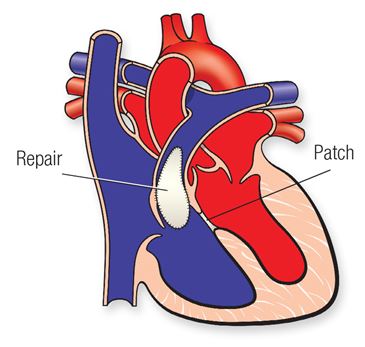
- Closes the hole in the heart with a patch
- Improves blood flow from the heart to the lungs
This may include removing thick muscle or fixing or replacing the pulmonary valve.
In some children with more complex forms of tetralogy of Fallot, a tube (conduit) may be placed between the right ventricle and the pulmonary artery to improve blood flow to the lungs. One type of operation that uses a conduit is called a Rastelli repair.
Tetralogy of Fallot in children: What families need to know
What activities can my child do?
Your child may need to limit some physical activity, especially competitive sports, if there are ongoing issues after repair. These can include a blockage or a leaky valve.
Children with lower heart function or heart rhythm problems may need to limit some activities.
If your child has had surgery and there are no ongoing problems, they may be able to take part in normal activities without extra risk.
Your child’s pediatric cardiologist will help decide which activities are safe.
What will my child need in the future?
If your child has had tetralogy of Fallot repaired, they will need regular checkups with a pediatric cardiologist. As an adult, they will need lifelong regular care from a cardiologist trained in congenital heart disease.
Some children may have ongoing heart problems. These can include blockage of blood flow or heart rhythm problems. Heart rhythm problems, called arrhythmias, can sometimes cause dizziness or fainting.
The long-term outlook is usually good. Some children may still need medications, heart catheterization or more surgery as they grow.
What about preventing endocarditis?
Some children with tetralogy of Fallot, especially those with prosthetic material, valve replacements or certain residual heart defects, may have an increased risk of endocarditis, an infection of the heart.
Some children may need to take antibiotics before certain dental procedures. This may include children who have had unrepaired cyanotic congenital heart disease, those who have had repair with prosthetic material within the past six months or those who have residual problems such as a leak or abnormal blood flow near a prosthetic patch or device.
Talk with your child’s doctor about whether antibiotics are needed. See the Endocarditis section for more information.
Tetralogy of Fallot in adults: What to expect
Most people with tetralogy of Fallot are diagnosed and treated in childhood.
As an adult, you may feel well and have few or no symptoms. However, some people may have ongoing or new heart issues over time. These can include:
- Leaky heart valves
- Blocked blood flow from the right side of the heart
- Heart rhythm problems (arrhythmias)
These issues can sometimes affect how well you can exercise. Some people may need medications, more procedures or surgery or a device similar to a pacemaker to manage heart rhythm problems.
Over time, some people may develop new heart problems after repair. These can include a leaky pulmonary valve or areas where the blood flow becomes narrowed again.
These changes may not cause problems right away, but they can affect heart function as you get older. Because of this, some people need another procedure or surgery to replace the pulmonary valve during adolescence or adulthood.
Ongoing Care
Medical
If you’ve had tetralogy of Fallot repaired, you’ll need regular checkups with a cardiologist who specializes in adult congenital heart disease.
Some people may need to take medication to help their heart pump or to manage heart rhythm problems.
Your doctor will use tests to check your heart over time. These may help show if you need another procedure or surgery. These tests include:
If you’re planning any non-heart-related surgery or invasive procedure, talk about it with your cardiologist.
Activity Restrictions
If tetralogy of Fallot has been repaired and there are no ongoing problems, you may be able to take part in most normal activities.
Some people may need to limit their activity if there are remaining issues, such as a blockage, a leaky valve or heart rhythm problems.
Your cardiologist will help decide which activities are safe for you. See the Physical Activity section for more information.
What will I need in the future?
If you’ve had tetralogy of Fallot repaired, you’ll need regular checkups with a cardiologist who specializes in adults with congenital heart disease.
Over time, some people may develop problems such as narrowed blood flow, a leaky pulmonary valve or heart rhythm problems (arrhythmias). These can sometimes cause dizziness or fainting.
The long-term outlook is usually good. Some people may still need medication, more procedures or another surgery.
Endocarditis Prevention
Some people with tetralogy of Fallot, especially those with prosthetic material, valve replacements or certain residual heart defects, may have an increased risk of endocarditis, an infection of the heart.
Some may need to take antibiotics before certain dental procedures. This may include those who have had unrepaired cyanotic congenital heart disease, those who have had repair with prosthetic material within the past six months or those who have residual problems such as a leak or abnormal blood flow near a prosthetic patch or device.
Talk with your cardiologist for guidance. See the Endocarditis section for more information.
Problems You May Have
Heart Function
Over time, the heart may not pump as well as it should. This most often affects the right side of the heart. Some people may need medications to help manage symptoms or support heart function if the heart becomes weakened over time.
Heart Rhythm Disturbances
People with repaired tetralogy of Fallot have a higher risk of heart rhythm problems called arrhythmias. These can sometimes cause symptoms, including dizziness or fainting.
Some people may need medication or a procedure to treat these problems. In some cases, a device, such as a pacemaker or defibrillator, may be needed.
Pregnancy
Many women with repaired tetralogy of Fallot can have a healthy, full-term pregnancy.
Some may have a higher risk of complications if there are ongoing heart problems, such as valve disease, heart rhythm problems or reduced heart function. Talk with your cardiologist before getting pregnant to understand your risks and plan your care. See the Pregnancy section for more information.
Will I need more surgery?
Some people need more procedures or surgery later in life, depending on how the heart changes over time.
These may include treatments done in the cardiac catheterization lab to open narrowed areas or improve blood flow.


