Truncus Arteriosus
Quick Facts
- Truncus arteriosus happens when one large artery comes out of the heart instead of two separate arteries.
- Most babies born with this condition also have a ventricular septal defect.
- Truncus arteriosus requires surgery to repair the heart.
What is truncus arteriosus?
Truncus arteriosus is a rare congenital heart defect. It happens when one large artery comes out of the heart instead of two separate arteries. The single artery gives rise to the blood vessels that carry blood to both the body and lungs.
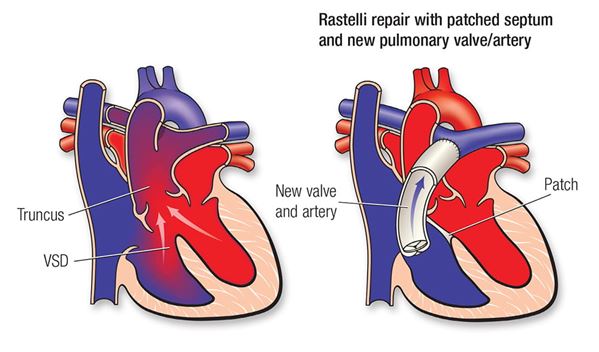
Most babies born with truncus arteriosus also have a hole in the wall between the heart’s two lower chambers. This hole is called a ventricular septal defect. Because of these differences in the heart’s structure, oxygen-rich blood and oxygen-poor blood can mix. This can cause too much blood to flow to the lungs. Extra blood returning from the lungs makes the heart pump harder than normal.
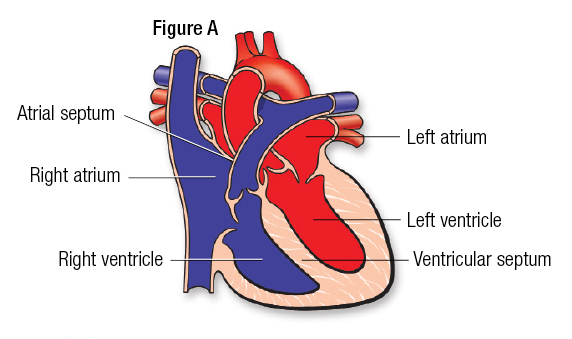
The heart has four chambers. The upper two chambers are the atria, and the lower two are the ventricles (Figure A). The chambers are separated by a wall of tissue called the septum. Blood is pumped through the chambers, aided by four heart valves. The valves open and close to let the blood flow in only one direction.
What causes truncus arteriosus?
Doctors do not always know the cause of truncus arteriosus. Some children with truncus arteriosus also have a condition called DiGeorge syndrome. A specific genetic change is identified in some people with truncus arteriosus, but in many cases, the exact cause is unknown.
How does truncus arteriosus affect the heart?
In truncus arteriosus, one blood vessel carries blood to both the body and lungs. This can cause too much blood to flow to the lungs, making the heart work harder than normal. Over time, the extra blood flow can damage the blood vessels in the lungs and lead to high blood pressure in the lungs, called pulmonary hypertension.
Without treatment, irreversible pulmonary vascular disease and severe pulmonary hypertension can develop early in life, making repair more difficult or, in some cases, no longer possible. The truncal valve, the valve that controls blood flow from the heart into the single large blood vessel, may also become narrowed or leaky, which can place additional strain on the heart.
How is truncus arteriosus treated?
Truncus arteriosus requires surgery to repair the heart and create separate paths for blood flow to the lungs and the rest of the body. Surgery is usually performed early in infancy to help prevent damage to the lung arteries caused by the increased blood flow.
During surgery, a patch is used to close the ventricular septal defect. The pulmonary arteries are separated from the single blood vessel (the truncus), and a tube called a conduit is placed between the right ventricle and the pulmonary arteries. This allows blood to travel to the lungs through a separate pathway.
Truncus arteriosus in children: What families need to know
Will my child need more surgery?
After truncus arteriosus repair, many children will need additional procedures as they grow. The conduit that connects the right ventricle to the pulmonary arteries can become too small as your child grows, or it may narrow or become blocked over time. When this happens, it may need to be replaced. The timing varies from child to child.
The pulmonary arteries can also become narrowed. In some cases, doctors can widen those areas by using a balloon catheter or placing a stent during a cardiac catheterization procedure. These treatments may help delay the need for surgery. If the narrowing is more severe, surgery may be needed. Your child’s cardiologist will recommend the best treatment option.
The heart valve that controls blood flow out of the heart is the truncal valve. Over time, this valve can become leaky and may need to be repaired or replaced.
What ongoing care will my child need?
Children with truncus arteriosus need regular follow-up care with a pediatric cardiologist. Some children may need medication after surgery. Your child’s cardiologist will monitor their heart with tests such as an electrocardiogram (EKG) and echocardiogram. These tests can help determine whether another procedure, such as cardiac catheterization, may be needed.
What activities can my child do?
Many children with repaired truncus arteriosus can participate in sports and physical activities. If valve narrowing or leakage is mild and tests show good heart function with no abnormal heart rhythms, your child can usually take part in some sports. Your child’s cardiologist may recommend avoiding certain high-intensity competitive sports. They can help determine which activities are appropriate.
What about preventing endocarditis?
Some people with truncus arteriosus may need antibiotics before certain dental procedures to help prevent endocarditis, an infection of the heart. Ask your child’s cardiologist if antibiotics are needed to help lower the risk of infection. See the Endocarditis section for more information.
Truncus arteriosus in adults: What to expect
How does truncus arteriosus affect me?
Truncus arteriosus causes symptoms of heart failure in childhood. Without treatment, it can lead to severe pulmonary hypertension.
Most adults with truncus arteriosus had surgery as children. After repair, the main concerns are usually the conduit and pulmonary valve that connect the heart to the lungs and the truncal valve, which controls blood flow from the heart to the body.
If these valves narrow or become leaky, symptoms can develop. These may include reduced ability to exercise and heart rhythm problems (arrhythmias).
Problems you may have
Heart Function
Over time, the heart muscle may not pump as well as it should after truncus arteriosus repair. Some people may need medication to:
- Help the heart pump more effectively
- Remove excess fluid
- Manage blood pressure
Heart Rhythm Problems
People with repaired truncus arteriosus have a higher risk of heart rhythm problems, called arrhythmias. These abnormal rhythms can start in either the upper or lower chambers of the heart. They may cause dizziness or fainting.
Medications may help control arrhythmias. Some people may need catheter ablation or surgery to treat certain arrhythmias. See the Arrhythmias section for more information.
High Blood Pressure in the Lungs
Sometimes, even when truncus arteriosus is repaired early, pulmonary hypertension can worsen over time. Symptoms may include shortness of breath, reduced ability to exercise, headaches and dizziness.
See the Pulmonary Hypertension section for more information.
Ongoing Care
What will I need in the future?
People with truncus arteriosus need regular follow-up with a cardiologist who specializes in adult congenital heart disease. You may need medication to help your heart work more effectively. If you need a non-cardiac surgery or another invasive procedure, talk with a cardiologist who has experience caring for adults with congenital heart disease.
Medical Follow-up
Your cardiologist will monitor your heart with a variety of tests. These may include electrocardiograms (EKGs), Holter monitors, exercise stress tests, echocardiograms and, in some cases, cardiac MRI or CT scans. These tests help assess heart function, the truncal valve and the conduit connecting the heart to the lungs. They can help determine whether another procedure, such as cardiac catheterization, may be needed.
Activity Restrictions
If you have reduced heart function or heart rhythm problems, you may need to limit some activities. If valve narrowing or leakage is mild and tests show good heart function with no abnormal heart rhythms, you can usually take part in some sports and physical activities. Your cardiologist may recommend avoiding certain high-intensity competitive sports. Ask them which activities are appropriate.
Endocarditis Prevention
Some people with truncus arteriosus may need antibiotics before certain dental procedures to help prevent endocarditis, an infection of the heart. Ask your cardiologist whether these precautions are recommended for you. See the section on Endocarditis for more information.
Pregnancy
Many women with repaired truncus arteriosus can have successful pregnancies with careful evaluation and specialized care. However, the level of risk depends on how well the heart is functioning. Pregnancy may carry higher risks for those who have significant problems with the pulmonary valve, truncal valve or pulmonary hypertension.
Before becoming pregnant, talk with a cardiologist who specializes in adult congenital heart disease. See the Pregnancy section for more information.
Women at higher risk should receive care from specialists with expertise in high-risk pregnancy and adult congenital heart disease.
Will I Need More Surgery?
Conduit Replacement
Many people with repaired truncus arteriosus will need more procedures over time. The conduit that connects the right ventricle to the pulmonary arteries can narrow, become blocked or become too small as a person grows. When this happens, the conduit may need to be replaced. The timing varies from person to person. The pulmonary arteries can also become narrowed and may require treatment.
In some cases, narrowed areas can be widened during a cardiac catheterization procedure using a balloon catheter or a stent. These treatments may help delay the need for surgery. If the narrowing is more severe, surgery may be needed. Your cardiologist will recommend the best treatment options for you.
Truncal Valve Replacement
The valve that controls blood flow from the heart to the body is the truncal valve. Before surgical repair, this valve is part of the single blood vessel that gives truncus arteriosus its name. Over time, the truncal valve can become leaky and may need to be replaced.


