Pulmonary Atresia
Quick Facts
- In pulmonary atresia, the pulmonary valve does not form. Blood cannot flow normally from the heart to the lungs.
- Most babies with pulmonary atresia need treatment soon after birth.
- People with pulmonary atresia need lifelong healthcare.
What is pulmonary atresia?
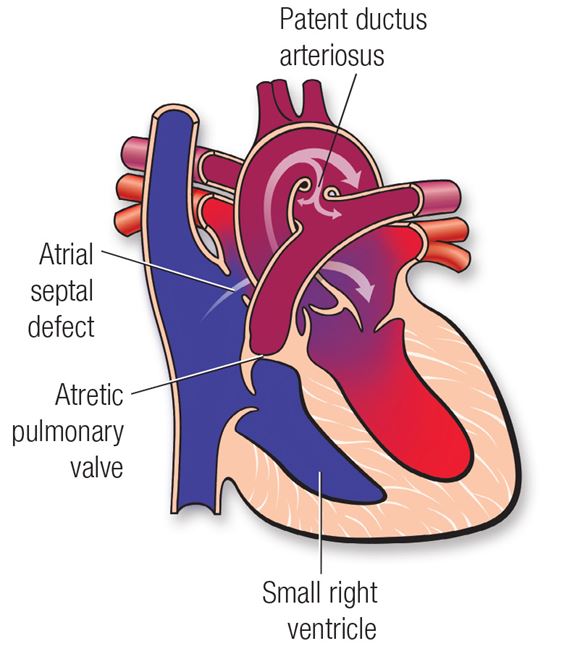
Pulmonary atresia with an intact ventricular septum (PA/IVS) is a congenital heart defect. In this condition, the pulmonary valve does not form, preventing blood from flowing from the right ventricle to the lungs. The right ventricle and tricuspid valve are often smaller than usual. Because blood cannot follow its normal path, it must take another route. Blood mixes between the upper chambers of the heart, and a temporary blood vessel called the patent ductus arteriosus (PDA) helps carry blood to the lungs. Babies with this condition need treatment soon after birth.
What causes pulmonary atresia?
In most cases, the cause of pulmonary atresia is not known. Some children have additional congenital heart defects along with pulmonary atresia.
Pulmonary atresia can also occur as part of tetralogy of Fallot (tetralogy of Fallot with pulmonary atresia), which is a different condition from pulmonary atresia with intact ventricular septum and is treated differently.
How does pulmonary atresia affect the heart?
In pulmonary atresia, blood must find another way to reach the lungs. An opening between the upper chambers of the heart lets oxygen-poor blood mix with oxygen-rich blood. The left ventricle then pumps this mixed blood to the body. Because the blood has less oxygen than usual, a baby may look blue, also called cyanosis.
In most newborns, the main source of blood flow to the lungs is the patent ductus arteriosus (PDA). The PDA is a temporary blood vessel that connects the pulmonary artery and the aorta before birth and normally closes shortly after birth. If the PDA gets narrow or closes, blood flow to the lungs can become dangerously low. This can cause severe cyanosis. Symptoms may appear soon after birth.
How is pulmonary atresia treated?
Treatment for pulmonary atresia often begins soon after birth. A medication called prostaglandin is often started soon after birth to keep the PDA open so blood can continue flowing to the lungs.
To increase blood flow to the lungs, your child’s care team may:
- Create a shunt between the aorta and the pulmonary artery
- Place a stent in the PDA to help keep it open
Long-term treatment depends on the size and development of the pulmonary artery and right ventricle.
If the pulmonary artery and right ventricle are very small, complete surgical repair may not be possible. Some children also develop abnormal channels, called sinusoids, between the coronary arteries and the right ventricle. These can affect which surgical options are available. When the pulmonary artery and right ventricle are suitable for repair, surgery or catheter-based procedures may establish blood flow from the right ventricle to the lungs and promote more normal two-ventricle circulation.
If the right ventricle remains too small to pump blood well, surgeons may connect the body’s veins directly to the pulmonary arteries. They may also reduce or close the opening between the upper chambers of the heart once it is safe to do so. These operations are known as the Glenn and Fontan procedures.
Pulmonary atresia in children: What families need to know
Which activities can my child do?
Children with pulmonary atresia may need to limit their physical activities based on their symptoms and endurance. Some competitive sports may not be safe. Your child’s pediatric cardiologist can help determine the right level of activity for them.
What will my child need in the future?
Children with pulmonary atresia need regular follow-up care with a pediatric cardiologist. As they grow older, they will need lifelong care from a cardiologist with special training in congenital heart disease. Some children may also need medications, catheter-based interventions or additional surgeries.
What about preventing endocarditis?
Children with pulmonary atresia have a higher risk of developing endocarditis, an infection of the inner lining of the heart or its valves. Ask your child’s pediatric cardiologist whether antibiotics are needed before certain dental procedures. Learn more in the Endocarditis section.
Pulmonary atresia in adults: What to expect
How does it affect me?
Some people with pulmonary atresia and an intact ventricular septum can have treatment that helps the right ventricle grow and function more normally. Treatment options depend on the size and development of the pulmonary artery and right ventricle. If the structures are very small, treatment may be similar to that used for other single-ventricle heart defects.
Some people are born with abnormal channels, called coronary sinusoids, between the coronary arteries and the right ventricle. These can make treatment more complex. In severe cases, a heart transplant may be considered.
Most adults with pulmonary atresia have had one or more heart surgeries during childhood. In many cases, treatment creates a circulation pattern that sends oxygen-poor blood from the body’s veins directly to the lungs, without passing through a pumping chamber. The remaining ventricle pumps blood to the body.
Because this circulation works differently from a typical two-ventricle heart, some people may develop complications over time related to blood flow through the heart and lungs.
If pulmonary atresia was repaired in childhood, what can I expect?
Most people with pulmonary atresia need treatment early in life to improve blood flow to the lungs. Some babies need a shunt to increase blood flow to the lungs and improve cyanosis. A small number of children do not need an operation right away.
Many adults with pulmonary atresia have also had additional surgeries to improve blood flow. These procedures are often done in stages. A bidirectional Glenn procedure connects the large vein from the upper body (superior vena cava) to the pulmonary arteries. Later, a Fontan procedure connects the large vein from the lower body (inferior vena cava) and veins from the liver to the pulmonary arteries.
During a Fontan procedure, surgeons may leave a small opening, called a fenestration, between the oxygen-poor and oxygen-rich sides of the circulation. The Fontan procedure usually improves oxygen levels and greatly reduces cyanosis. However, because the heart still functions differently from a typical two-ventricle heart, lifelong follow-up care is important.
Problems You May Have
Many people with pulmonary atresia who had surgery as children are living well into adulthood and remain active. However, some people develop health problems over time.
People who did not have surgery may have complications that can shorten life expectancy. These include:
- Cyanosis (low oxygen levels that can cause a bluish color to the skin)
- Lower energy levels
- Higher risk of infections such as endocarditis
After successful treatment, many adults can live active lives, although strenuous exercise may be limited.
Potential long-term problems include:
- Abnormal heart rhythms (arrhythmias), including heartbeats that are too fast, too slow or irregular
- Fluid buildup, especially in the abdomen, legs or feet
- Varicose veins or chronic venous insufficiency
- Heart failure or weakening of the heart muscle
- Blood clots that may require treatment with anticoagulation medication
Ongoing Care
Medical follow-up
You will need regular follow-up visits with a cardiologist who specializes in congenital heart disease, often at least once a year. Many people with pulmonary atresia need daily medications.
Your cardiologist may recommend tests such as:
- Electrocardiogram (EKG)
- Echocardiogram (ultrasound of the heart)
- Cardiac MRI
- Holter or other heart rhythm monitoring
- Exercise stress testing
- Cardiac catheterization
You should also talk with your cardiologist before having non-heart surgery or other invasive procedure.
Activity Restrictions
You may need to limit some activities, particularly competitive sports. If you have decreased heart function or heart rhythm problems, you may need more activity restrictions. Your cardiologist can help you determine which activities are safe for you.
Learn more in the Physical Activity section.
Endocarditis Prevention
You may need antibiotics before certain dental procedures to help prevent endocarditis, an infection of the heart. Talk with your cardiologist about your risk and whether preventive antibiotics are needed.
Learn more in the Endocarditis section.
Pregnancy
Some women who have had a Fontan procedure can become pregnant and safely carry a pregnancy to term. However, pregnancy may carry higher risks if you have:
- A weakened heart muscle
- A blockage or blood clot in the Fontan connection
- Heart rhythm problems
If you are considering pregnancy, talk with your cardiologist before conception to understand your risks and plan your care. You should also receive care from a high-risk obstetrician who has experience caring for people with congenital heart disease during pregnancy and delivery.
Learn more in the Pregnancy section.
Will You Need More Surgery?
Most surgeries for pulmonary atresia are performed during the first few years of life. Many people do not need more surgery. However, some people may need more procedures later in life to treat complications or improve how the heart works.
Additional treatment may include:
- Closing openings in the heart
- Implanting a pacemaker
- Repairing or replacing a heart valve that is not working properly
In rare cases, a heart transplant may be considered. Your cardiologist can determine which treatments may be best for your condition.


