Ventricular Septal Defect (VSD)
Quick Facts
- A ventricular septal defect (VSD) is a hole in the wall between the heart’s ventricles.
- Symptoms related to a VSD depend on the size of the hole.
- If a VSD is large enough to make the heart and lungs work harder, treatment may be needed.
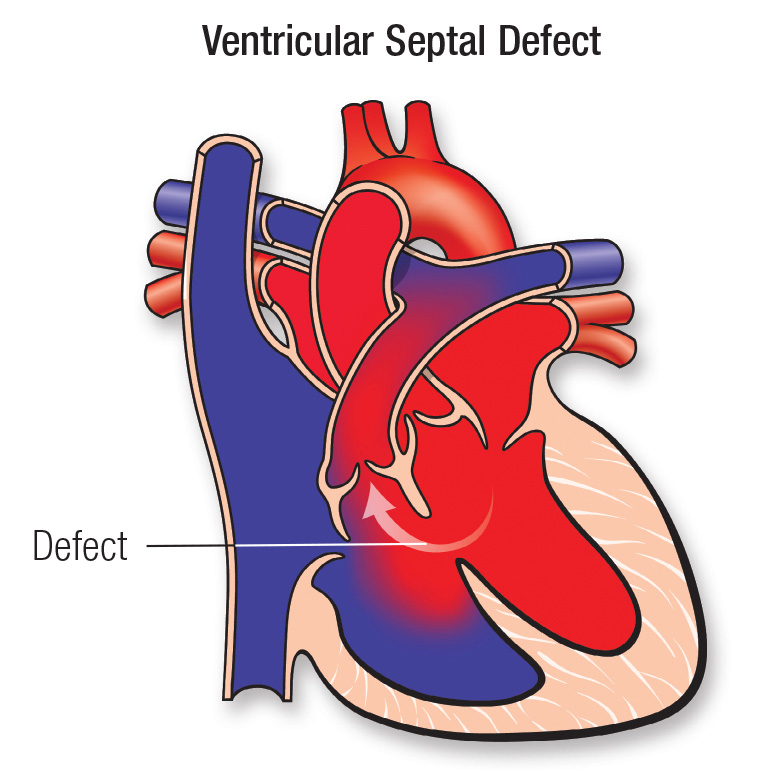
What is a ventricular septal defect?
A ventricular septal defect, or VSD, is a hole in the wall between the two lower chambers of the heart. These lower chambers are called ventricles.
Before birth, this wall usually closes as the heart develops. When it does not close all the way, oxygen-rich blood can flow through the opening into the right side of the heart, sending extra blood to the lungs. This can cause the heart to pump extra blood to the lungs, making both the heart and lungs work harder. A large VSD can increase pressure in the lung arteries over time. In rare cases, long-term damage to these blood vessels can eventually lower oxygen levels in the body.
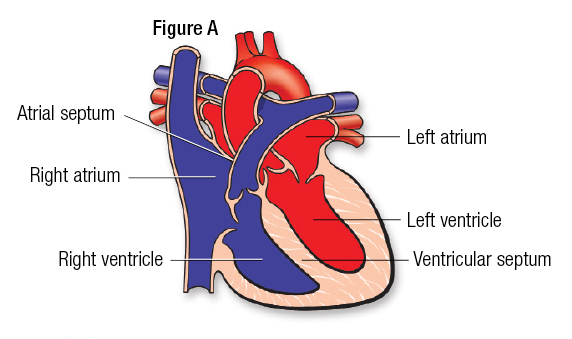
The heart has four chambers. The upper two chambers are the atria, and the lower two are the ventricles (Figure A). The chambers are separated by a wall of tissue called the septum. Blood is pumped through the chambers, aided by four heart valves. The valves open and close to let the blood flow in only one direction.
What causes a VSD?
In most children, the cause of a VSD isn’t known. A VSD is one of the most common congenital heart defects, meaning it is present at birth. Some children can have other heart defects along with a VSD.
How does a VSD affect the heart?
Normally, the left side of the heart pumps oxygen-rich blood to the body, while the right side pumps oxygen-poor blood to the lungs.
In a child with a VSD, blood can flow through the hole from the left ventricle to the right ventricle. This sends extra blood to the lungs. If the VSD is large, the extra blood flow can make the heart and lungs work harder and may cause lung congestion.
What are the symptoms of a ventricular septal defect?
Symptoms depend on the size of the opening.
If the VSD is small, it may not cause any symptoms because the heart and lungs don’t have to work harder. The only sign of a VSD may be a heart murmur. This is an extra sound a healthcare professional can hear with a stethoscope.
If the VSD is large, a child may breathe faster or harder than normal. Infants may have trouble feeding and may not gain weight as expected. Symptoms may not appear until several weeks after birth. Extra blood flow to the lungs can also increase pressure in the lung blood vessels. Over time, this may lead to permanent damage to those blood vessels.
How is a VSD treated?
Treatment depends on the size of the opening and whether it is causing symptoms.
If the opening is small, it may not make the heart and lungs work harder. Surgery or other treatments may not be needed. Small VSDs often close on their own. There is no medication or other treatment that can make a VSD get smaller or close faster.
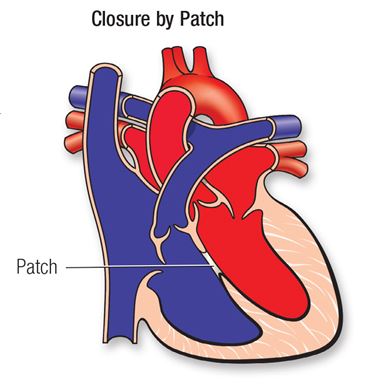
Closure by patch
If a baby is very ill, has several VSD or has complex heart anatomy, a temporary procedure called pulmonary artery banding may be recommended before complete repair. This procedure narrows the pulmonary artery to reduce the blood flow to the lungs. When the child is older, the band can be removed and the VSD repaired with open-heart surgery.
If the opening is large, surgery may be needed to close it and help prevent serious complications. Some babies develop severe symptoms and may need repair within the first few months of life. In other children, surgery may be delayed. Medications may be used for a short time to manage symptoms, but they do not close the VSD or prevent permanent damage to the lung arteries if a large VSD remains untreated.
To close a large VSD, a surgeon usually places a patch over the hole. The patch may be made of a special surgical fabric or from pericardium (the natural tissue surrounding the heart). Over time, the heart’s lining tissue grows over the patch, making it a permanent part of the heart. Some VSDs can be closed in the cardiac catheterization lab instead of with open-heart surgery.
Ventricular septal defect in children: What families need to know
What activities can my child do?
If the VSD is small, or if it has been repaired, your child may not need any special limits on physical activity. Many children with a small or repaired VSD can take part in normal activities without increased risk.
What will my child need in the future?
Your child’s pediatric cardiologist will recommend regular follow-up visits. Depending on the location of the VSD, the cardiologist may watch for uncommon problems, such as a leak in the aortic valve. In rare cases, older children with a small VSD may need surgery if this valve develops a leak.
After a VSD is repaired, a pediatric cardiologist will continue to check your child’s heart regularly to make it is working normally.
The long-term outlook for most children is good. Most do not need medications or more surgery after a successful repair.
How can endocarditis be prevented?
Most children with a VSD are not at increased risk of developing endocarditis, an infection of the heart. Your child’s cardiologist may recommend antibiotics before certain dental procedures for a period after VSD repair. See the Endocarditis section for more information.
Ventricular septal defect in adults: What to expect
What can an adult expect after childhood VSD surgery?
Large VSDs can cause breathing difficulties during childhood. Because many children with large VSDs have surgery to close the defect, large VSDs are uncommon in adults. When they do occur, they may cause shortness of breath.
Most adults with a small VSD do not have symptoms because the heart and lungs do not have to work harder. A small VSD may cause a heart murmur. Even a small unrepaired VSD slightly increases the risk of endocarditis, an infection of the heart’s inner lining or valves.
What if my VSD is very small or closed by itself?
Many children with a VSD do not need surgery or other treatment. In many cases, the opening closes on its own.
Adults who were told they “had a hole in their heart” that closed on its own usually do not have a heart murmur and have a normal EKG.
If an echocardiogram is done, it may show a small bulge in the wall between the ventricles where the VSD was located. This is called a ventricular septal aneurysm. Despite its name, it is usually a normal, harmless finding after a VSD closes on its own. If it is not recognized as an expected finding, it may lead to unnecessary concern or additional testing.
If my VSD was closed in childhood, what can I expect?
If the opening was large, it was likely repaired with open-heart surgery.
VSD repair is usually done by placing a patch made of fabric or pericardium, the lining around the outside of the heart, over the hole. Over time, the heart’s lining tissue grows over the patch, making it a permanent part of the heart. Some VSDs can be closed without a patch. Some types of VSDs can also be closed in the cardiac catheterization lab using a device that plugs the hole. Younger adults may have had this procedure.
People with repaired VSDs who have normal heart function and normal pulmonary artery pressure usually have a normal life expectancy. Long-term complications are uncommon. However, a small number of people may develop problems with a heart valve or extra muscle tissue on the right side of the heart. Anyone who has had VSD surgery should have regular check-ups with a cardiologist who specializes in adults with congenital heart disease. Medications are rarely needed.
A large VSD that is not repaired can lead to pulmonary hypertension, or high blood pressure in the lungs.
If the VSD persists, should it be repaired in adulthood?
Closure is usually recommended for a small VSD only if it has caused endocarditis, a heart infection that may be related to the defect, or if the location of the VSD affects how one of the heart valves works.
For a large VSD, the amount of damage to the lung blood vessels helps determine whether the defect can be safely closed. Many people benefit from surgery, but if severe, irreversible, pulmonary hypertension has developed, closing VSD may no longer be recommended.
Possible complications with a VSD
People with a small VSD that remains open have a small risk of developing endocarditis, an infection of the heart’s inner lining or valves. The aortic valve may also develop a leak and should be monitored.
People whose VSD was repaired early in life are unlikely to have significant long-term problems. If the VSD is completely closed and there is no leak around the patch, the risk of developing endocarditis later is very low. Rarely, abnormal heart rhythms can occur. In some people, heart function may be reduced after VSD repair. If heart failure develops, medication may be used to:
- Help remove excess fluid
- Improve the heart’s pumping ability
- Control blood pressure
In uncommon cases, people with a VSD and pulmonary hypertension may need medical treatment.
Ongoing Care
Medical Follow-up
A cardiologist should examine you regularly. If your VSD is small or was repaired during childhood and no other problems are found, follow-up visits every 2 to 5 years may be enough.
What will I need in the future?
Medications may be needed only if you develop heart failure, which is uncommon, or if you have pulmonary hypertension.
Your cardiologist may use tests to monitor your heart when needed. These tests may include electrocardiograms (EKGs), Holter monitors, exercise stress tests and echocardiograms. In some people, cardiac MRI or CT may also be used to evaluate heart function and any residual defects.
Will another surgery be needed?
People whose ventricular septal defects are repaired rarely need another surgery. In some cases, additional surgery may be needed if the patch leaks or if another opening is found later. Whether surgery is needed depends on the size of the remaining defect.
Activity Restrictions
Most people with a VSD do not need to limit their physical activity. However, if you have pulmonary hypertension or your heart does not pump as well as it should, you may need to adjust your activity level based on your symptoms and endurance. Your cardiologist can help determine what level of activity is right for you.
Endocarditis Prevention
According to the current American Heart Association recommendation, most people with unrepaired VSD do not need antibiotics before dental procedures to prevent endocarditis. After a VSD is successfully closed, preventive treatment is usually needed only during for the first six months of healing. See the endocarditis section for more information.
Pregnancy
Once a VSD has been closed and there is no remaining pulmonary hypertension, the risk related to pregnancy is generally low.
If the VSD remains open, talk with your cardiologist before becoming pregnant. Pregnancy may still be well tolerated if pulmonary hypertension is not present, but you should discuss your individual risks with your cardiologist before becoming pregnant. See the sections on Pregnancy and Genetic Counseling for more information.


