Fats in Foods
Fast Facts on Fats
- Limit saturated fats.
- Avoid trans fats.
- Replace foods with saturated and trans fats with foods that contain monounsaturated and polyunsaturated fats.
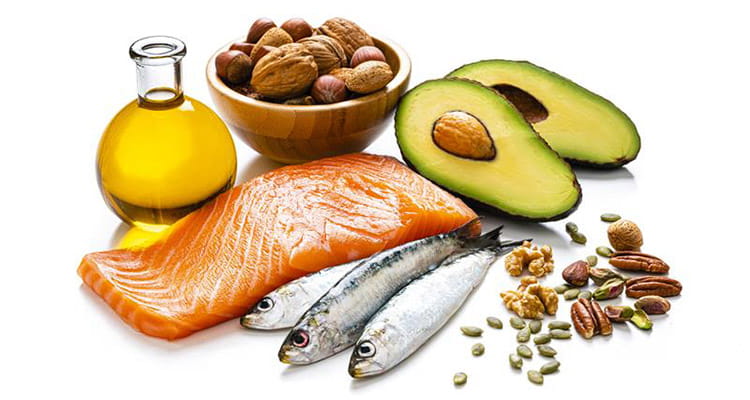
Fats that are found in our foods can be part of a healthy diet. Fats are essential to our health, including giving us energy and helping our body absorb vitamins. Different types of fats also can have different effects on the cholesterol levels in your body.
Unhealthy Fats: Saturated and Trans Fats
The American Heart Association recommends limiting saturated fats and avoiding trans fats. The recommendation is to consume less than 6% of total calories from saturated fat. If you need about 2,000 calories a day, no more than 120 of them should come from saturated fat. That’s about 13 grams or less of saturated fat per day.
A diet high in saturated fats and trans fats raises bad cholesterol (LDL) levels in your blood, increasing the risk of heart disease and stroke. Trans fats also can lower your good (HDL) cholesterol levels and is also associated with a higher risk of developing type 2 diabetes. Some studies have shown that diets high in artificial/industrial trans fats may even increase cardiovascular disease risk even more than saturated fats.
Replacing foods high in unhealthy fats with unsaturated fats can lower risk of heart disease. It can also support kidney and metabolic health, which is the way your body creates, stores and uses energy.
Saturated fats are found in animal-based foods such as beef, pork, poultry, full-fat dairy products, such as butter, eggs and tropical oils, such as coconut and palm. Saturated fats are typically solid at room temperature.
Both types of trans fats — naturally occurring and artificial/industrial — are harmful to our health.
- Naturally-occurring trans fats are present in small amounts in foods made from animals, such as milk and meat products.
- Artificial /or industrial trans fats are created by modifying liquid vegetable oils to make them solid at room temperature.
Partially hydrogenated oils, or PHOs, are the main dietary source of artificial/industrial trans fats. Fortunately, PHOs have been eliminated from the U.S. food supply, and significant progress is being made to remove them from the global food supply.
Healthy Fats: Monounsaturated and Polyunsaturated Fats
The American Heart Association recommends consuming foods that contain monounsaturated fats and polyunsaturated fats in place of those that contain saturated fats and trans fats.
Monounsaturated and polyunsaturated fats can help reduce bad cholesterol levels in your blood in place of saturated fats, which can lower your risk of heart disease and stroke. They also provide nutrients to help develop and maintain your body’s cells. Oils rich in polyunsaturated fats also provide vitamin E, an important antioxidant vitamin.
Monounsaturated and polyunsaturated fats are typically liquid at room temperature but start to turn solid when chilled. Oils rich in polyunsaturated fats also provide essential fats that your body needs but can’t produce itself, including omega-6 and omega-3 fatty acids. You must get these essential fats through food.
Choose these healthier options to replace foods with saturated fats:
- Liquid nontropical plant oils (canola, corn, olive, nut, safflower, soybean, sunflower and nut oils)
- Low-fat or fat-free dairy products
- Skinless poultry or lean meat, if you eat meat
- Beans, peas, lentils or tofu
- Fatty fish
- Nuts and seeds