Chris Kidwell's CHD Story
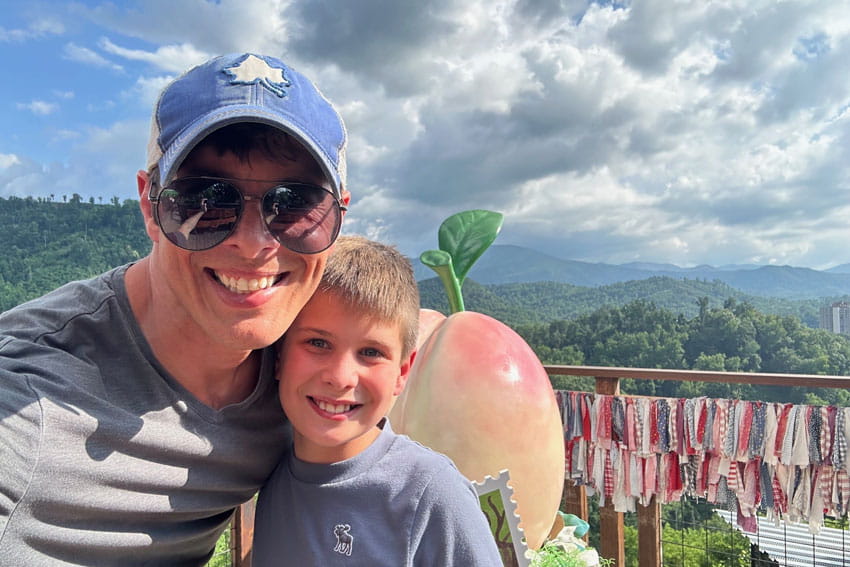
Chris Kidwell and his son Carter. Chris was born with d-transposition of the great arteries, a defect where his aorta and his pulmonary artery were switched. Carter was born with a an atrial septal defect, a hole between the heart’s upper chambers.
As an adult survivor of congenital heart disease, Chris Kidwell is grateful to be healthy and active.
“I know I am super fortunate to be alive today and have come to learn the value that gratitude plays in our lives, especially after reflecting on my own medical journey,” said Chris, 38.
In 1987, Chris was diagnosed with a rare heart defect at 1 day old. His aorta (the main artery that carries blood away from the heart) and his pulmonary artery (the artery that carries blood from the heart to the lungs) were switched. This type of defect is called d-transposition of the great arteries. The percentage of oxygen in his blood was 30% when it should have been in the 90s.
At 6 days old, he had an arterial switch operation to correct the condition. The surgery was a success, and he continued with yearly checkups. Everything looked great, but there was one downside for Chris, an athletic kid who loved martial arts. Contact sports were prohibited because a hit to the chest could damage his heart.
Chris followed doctor’s orders, but at 11 he was told he needed another surgery to clear scar tissue that caused his pulmonary artery to narrow. After the procedure, his recovery was quick, and he returned home within days.
In his 30s, Chris was drawn to jiu-jitsu, a non-striking martial art that focuses on weaponless combat. He found the training helped him not only physically, but also mentally.
“People born like me have statistically higher rates of mental health disorders, addiction and suicide,” said Chris, who lives in Orleans, Indiana. “Jiu-jitsu encourages humility, holistic development, and gives individuals the confidence to overcome challenges despite being at a disadvantage.”
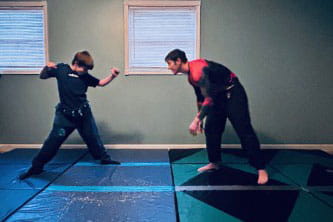
Chris and his son Carter practicing jiu-jitsu.
Chris trains up to six times a week. His dedication and strength often elicit shocked reactions when he spars with opponents who are bigger or more experienced.
“When they learn of my heart surgeries and I show them my scar, they are surprised. I have even seen a few jaws drop.” he said.
As Chris studied and researched jiu-jitsu, he also began teaching. He has taught all ages ranging from 4 year olds to people in their 60s. The work inspired Chris to earn his doctorate in education. His research examined jiu-jitsu’s holistic benefits.
“Dealing with heart disease or trauma, the key is to continue to fight. You have to get back up and answer the bell,” he said, referring to the jiu-jitsu practice of confronting any challenge with a willingness to face whatever comes next.
This mindset was beneficial when his son Carter, now 10, underwent his own heart procedure in March 2024. During a wellness checkup, there was a swooshing sound in Carter’s heart. Tests showed he had an atrial septal defect, or a hole between the heart’s upper chambers. He had a procedure to close the hole and has no physical restrictions. Carter was treated at the same hospital as Chris.
“Being there brought back a lot of memories,” Chris said. “Walking through the halls again brought on strong emotions; I had teary eyes and got choked up a bit knowing that my son had to go through the same thing.”
As for the future, Chris is optimistic. He plans to stay active and hopes his story inspires others.
“I’m kind of a living example of what those with CHD can accomplish, and if they could fix me in 1987, I’m sure they can do even better today. I would tell anyone who is born with CHD, or who has a loved one with CHD, to have faith and be brave. Bravery doesn’t mean that you’re not afraid, for without fear, there is no bravery. Your courage in the face of adversity will develop confidence, inspire others, and help you overcome life’s challenges.”
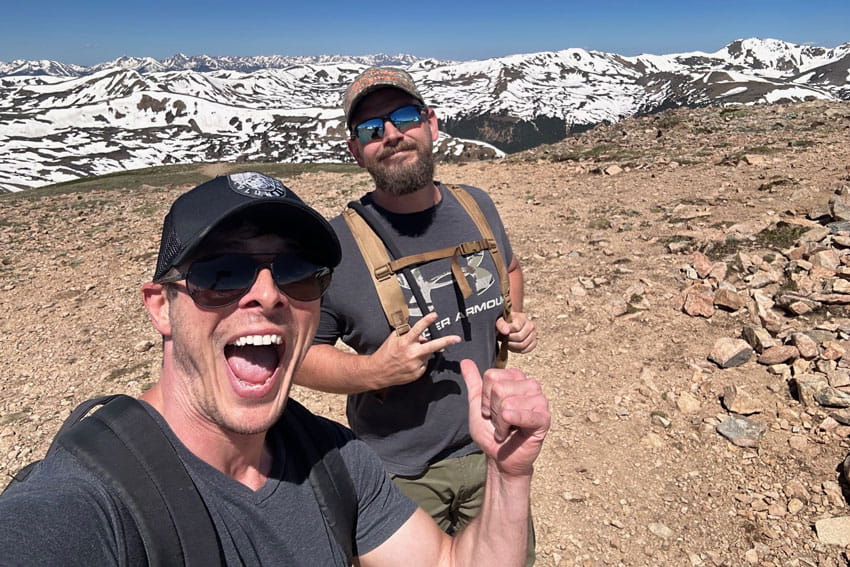
Chris and friend Bryan Felix after hiking to the top of Mt. Sniktau in Colorado.


